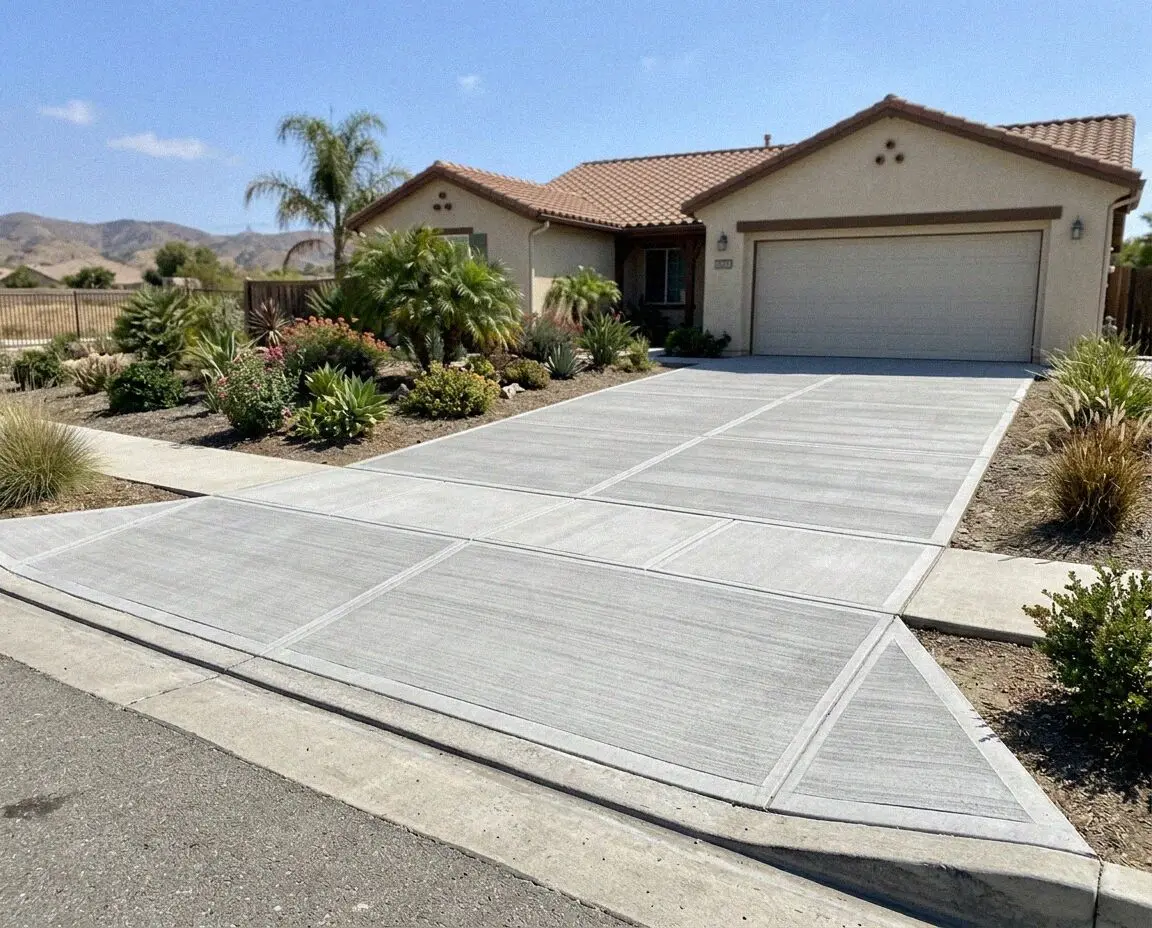
Concrete Driveway Building
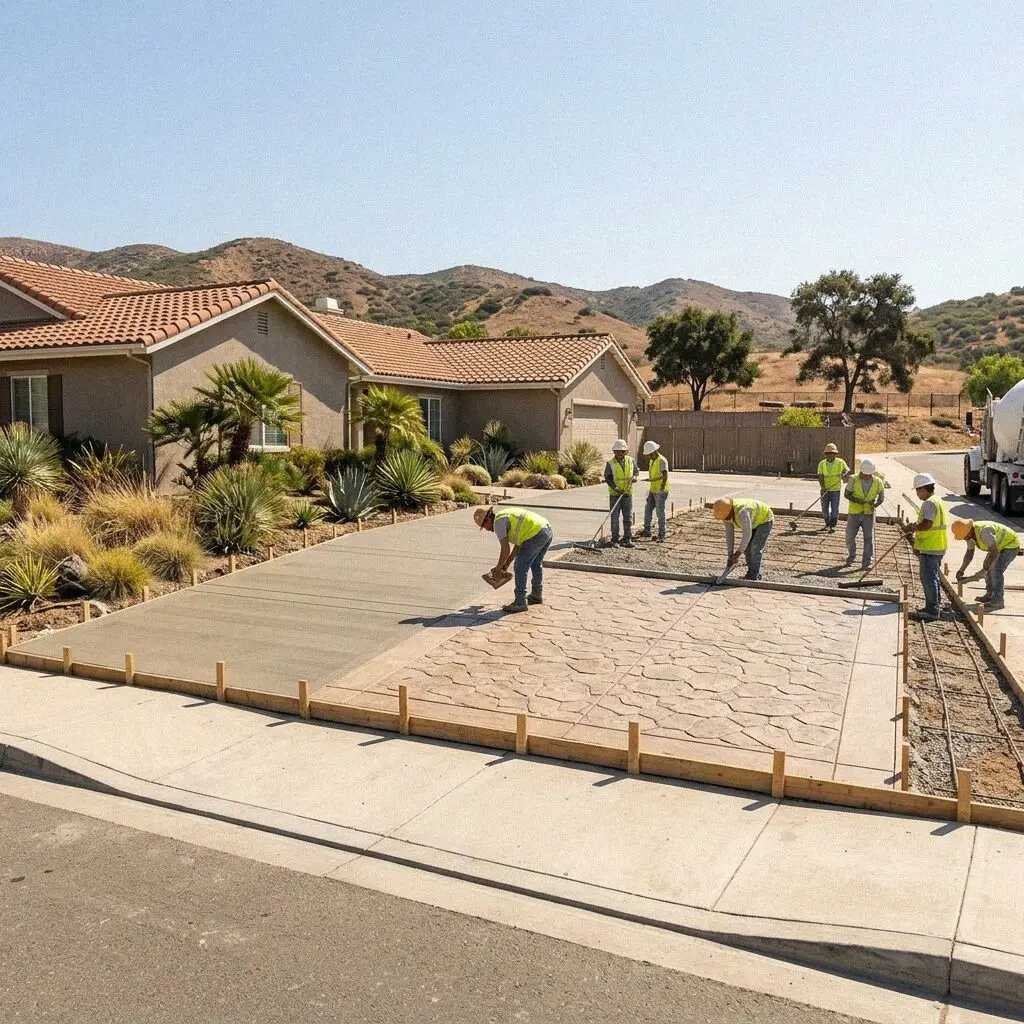
Cracked or dipping drives taken out and repoured at 4 inches, jointed the same day, alley runs laid in bays so nothing is walked over.

Drives, walks, patios and garage slabs poured from the Old Towne blocks out to Orange Park Acres. Ring us and the figure is measured on your own lot before a crew date is held.


 5.0 Stars Rated by our customers · Google, Facebook and the BBB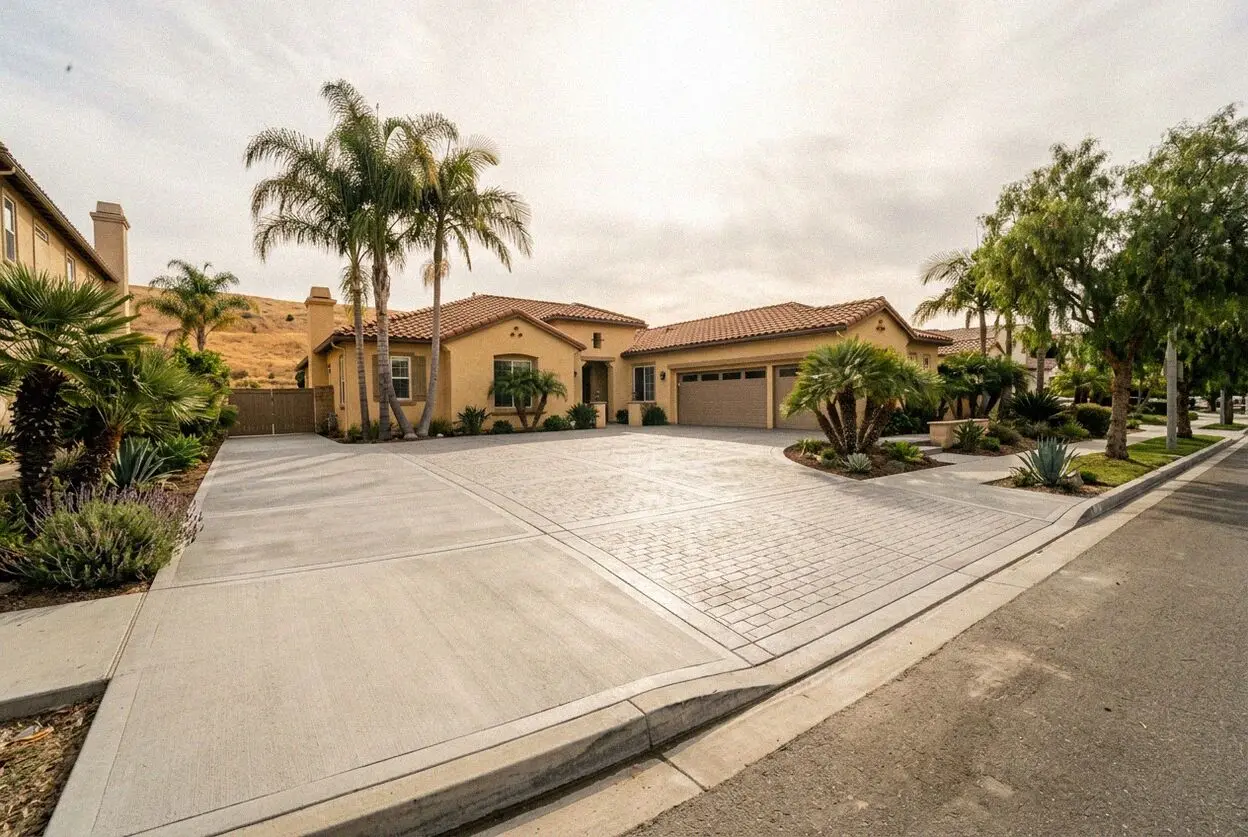
Plaza Orange Concrete works the whole city and the towns around it: a driveway taken out and repoured on a 1912 lot, a front walk rebuilt round a street tree, a patio behind a 1970s tract house, a shop floor off Katella. Ninety-year-old concrete and forty-year-old concrete fail differently, and both are here on the same afternoon.
Cracked or dipping drives taken out and repoured at 4 inches, jointed the same day, alley runs laid in bays so nothing is walked over.
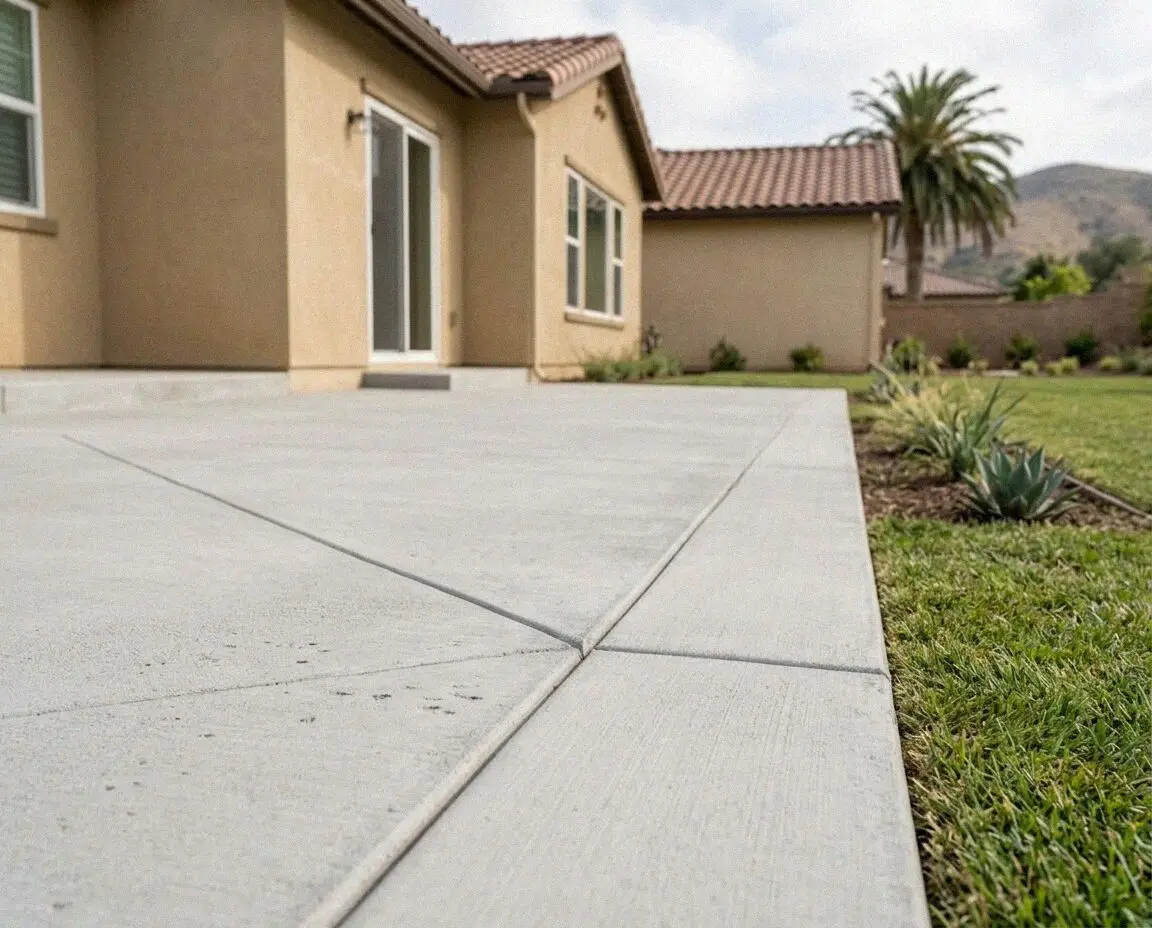
Rear patio slabs for back gardens in Orange, set low off the door line, dug down through the wash gravel and stepped where the ground falls away.
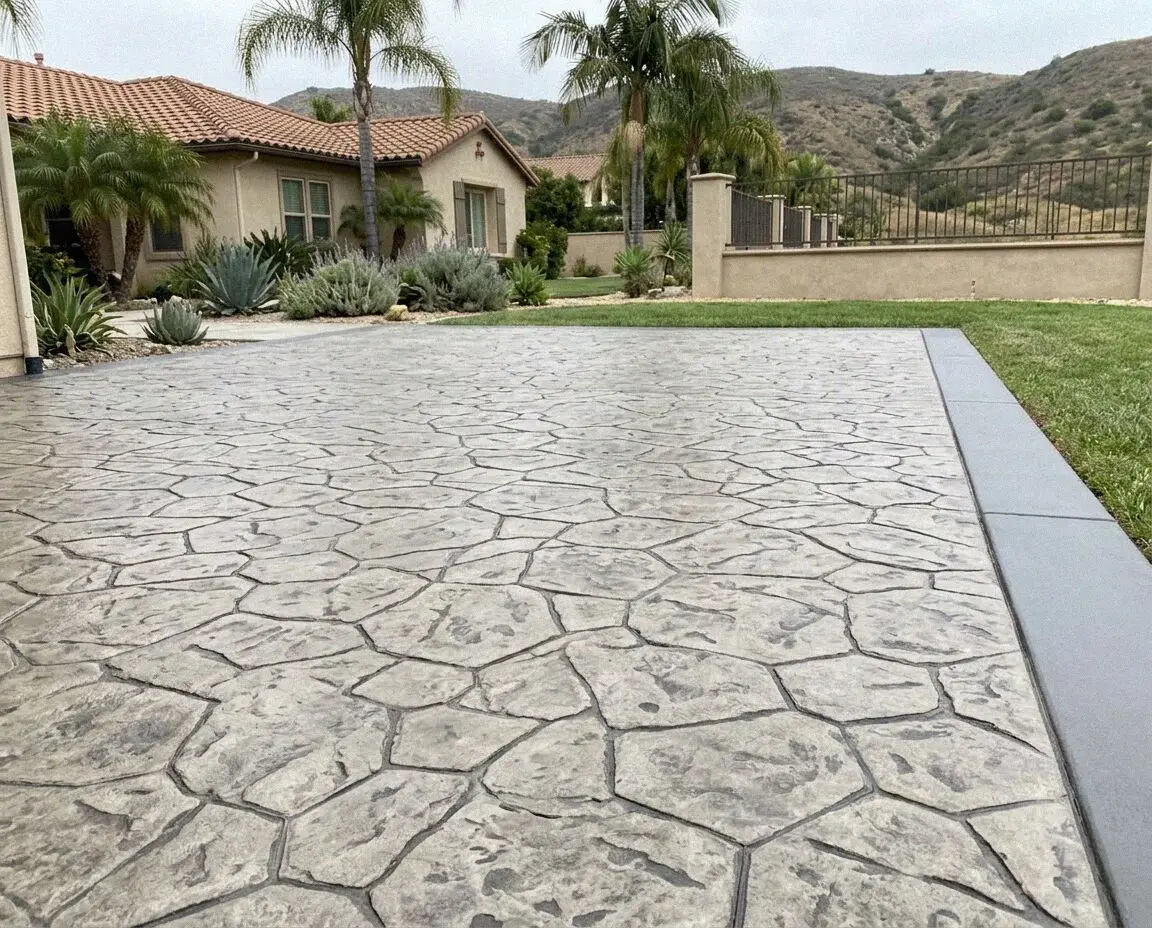
Patio holding water after every sprinkler run? A stamped slab patterned along the fall sheds it in minutes and keeps its color for years.
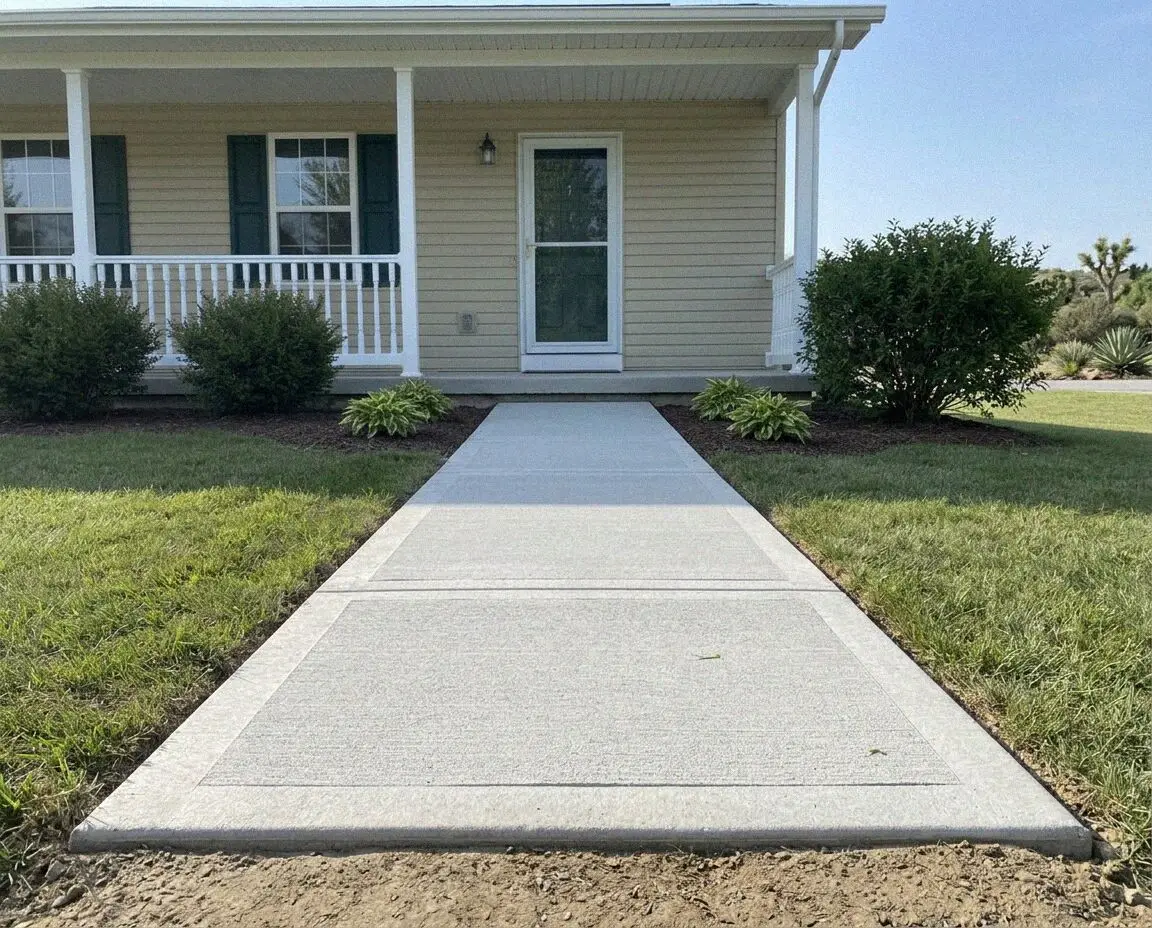
Stepped, rocking or ramped in blacktop? The bad panels are sawn out at the joint and repoured 4 inches deep, with the permit filed by us.
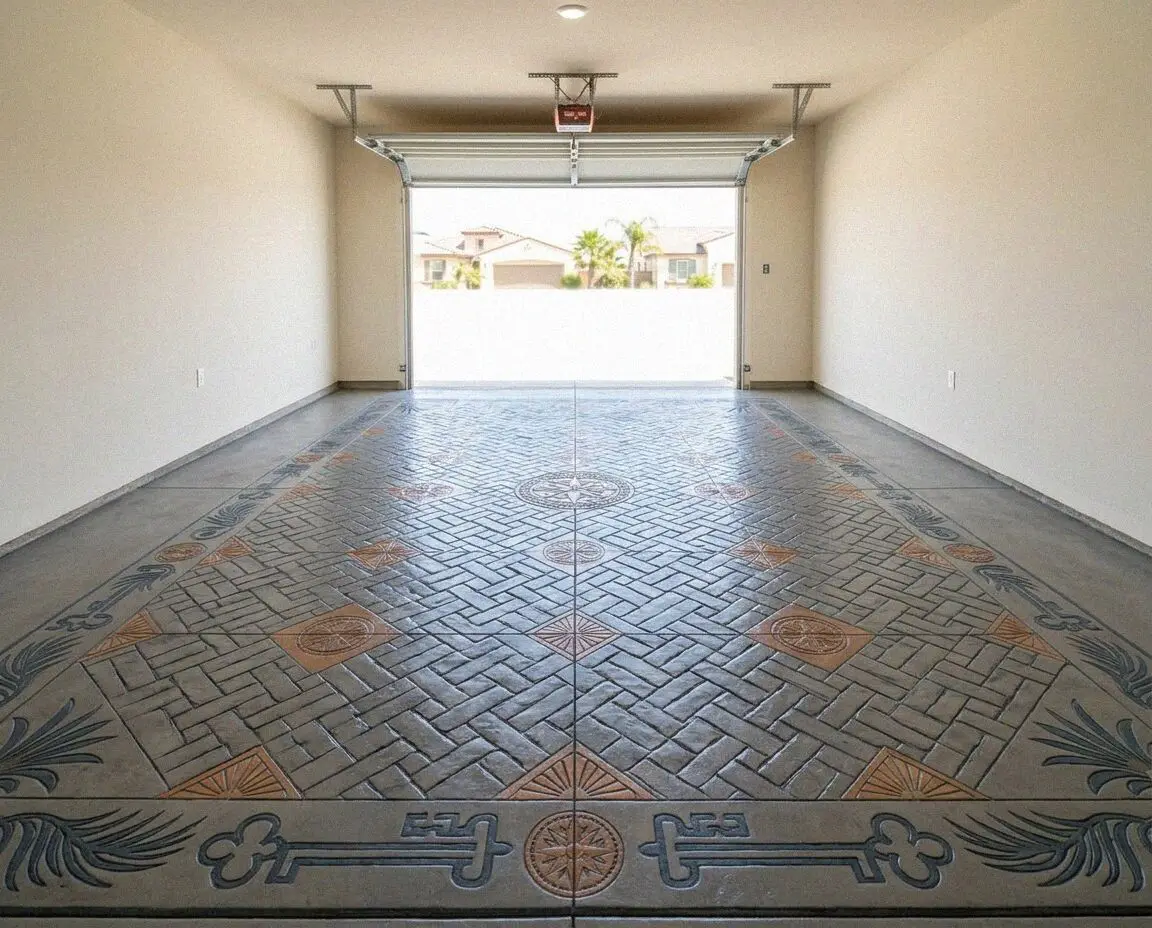
Coating lifting, a dish under the jack or a floor that has never been dry? The bay comes out to soil, 10 mil goes down and five inches goes back.
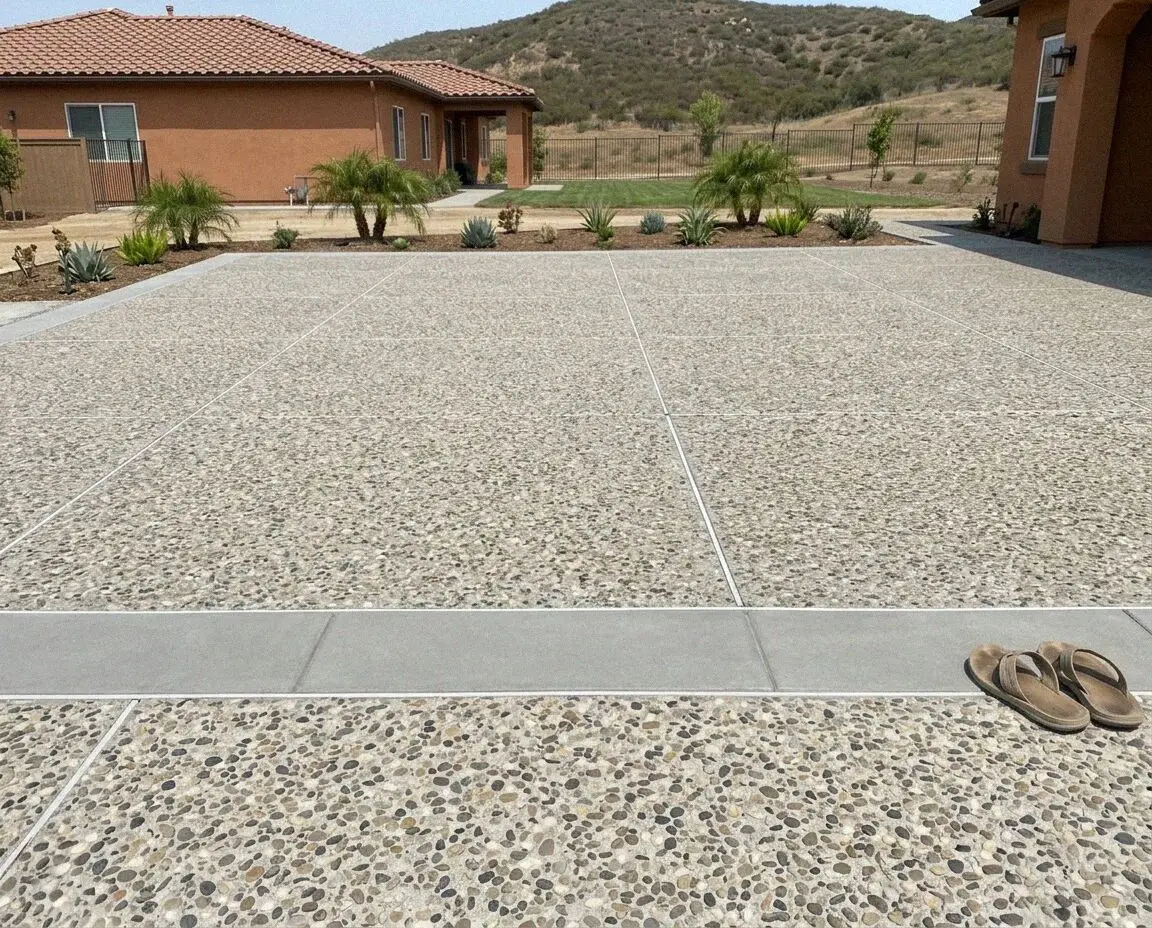
Colored patio gone white under the sprinklers? An exposed aggregate or salt finish carries hard water and full sun without a color to lose.
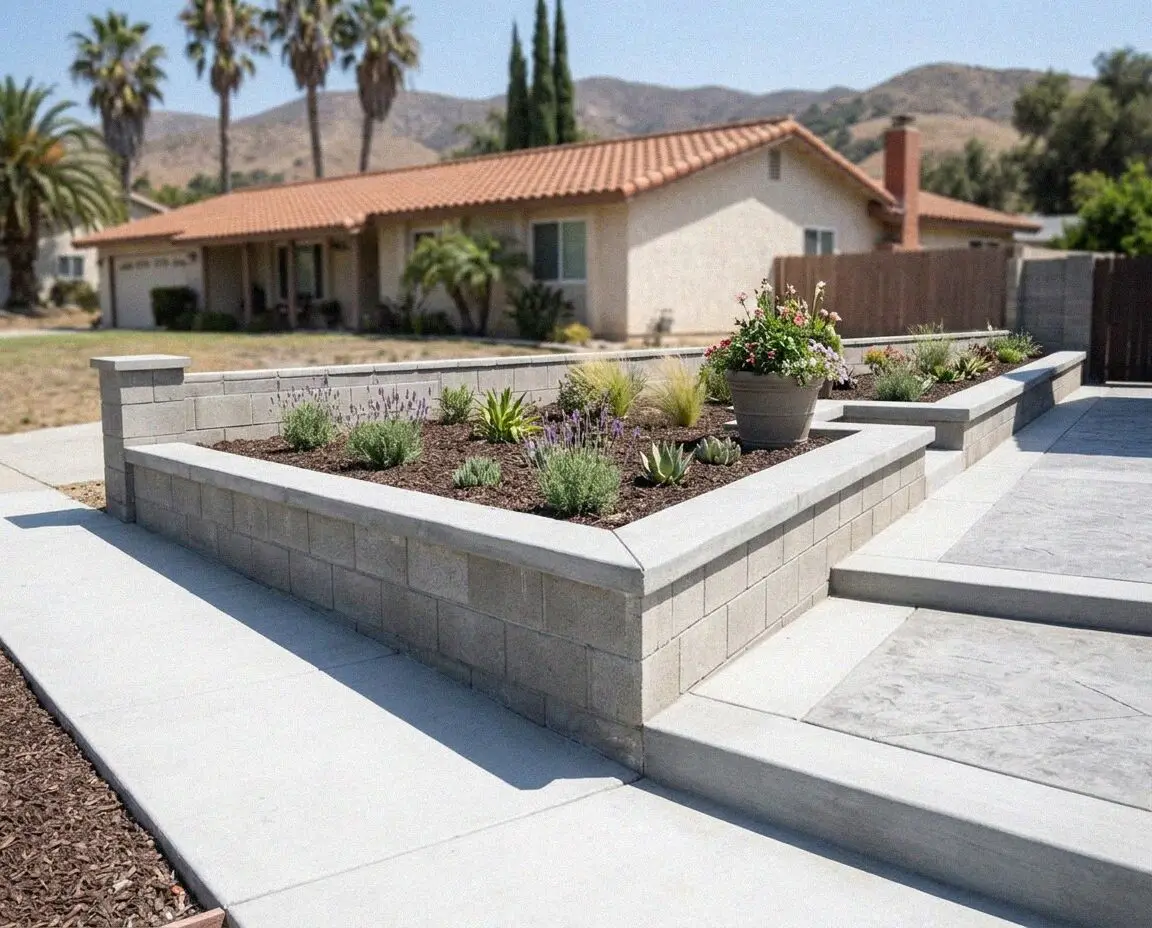
A poured wall sized to what stands above it, footed below the fill, drained at the heel and backfilled with crushed rock that does not push.
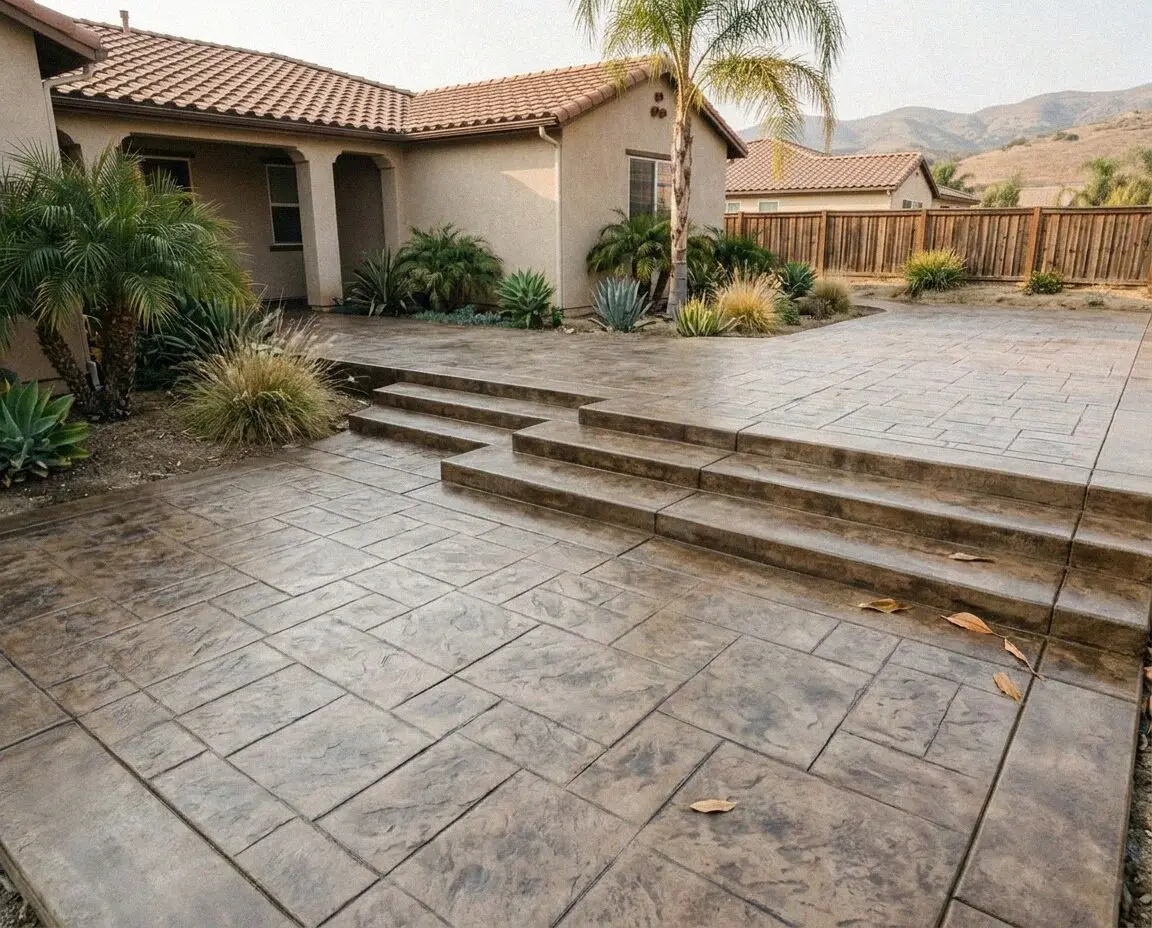
A floor cast inside a house on a crawl space, fill compacted in lifts, sheeted against the ground and struck level with the room beside it.
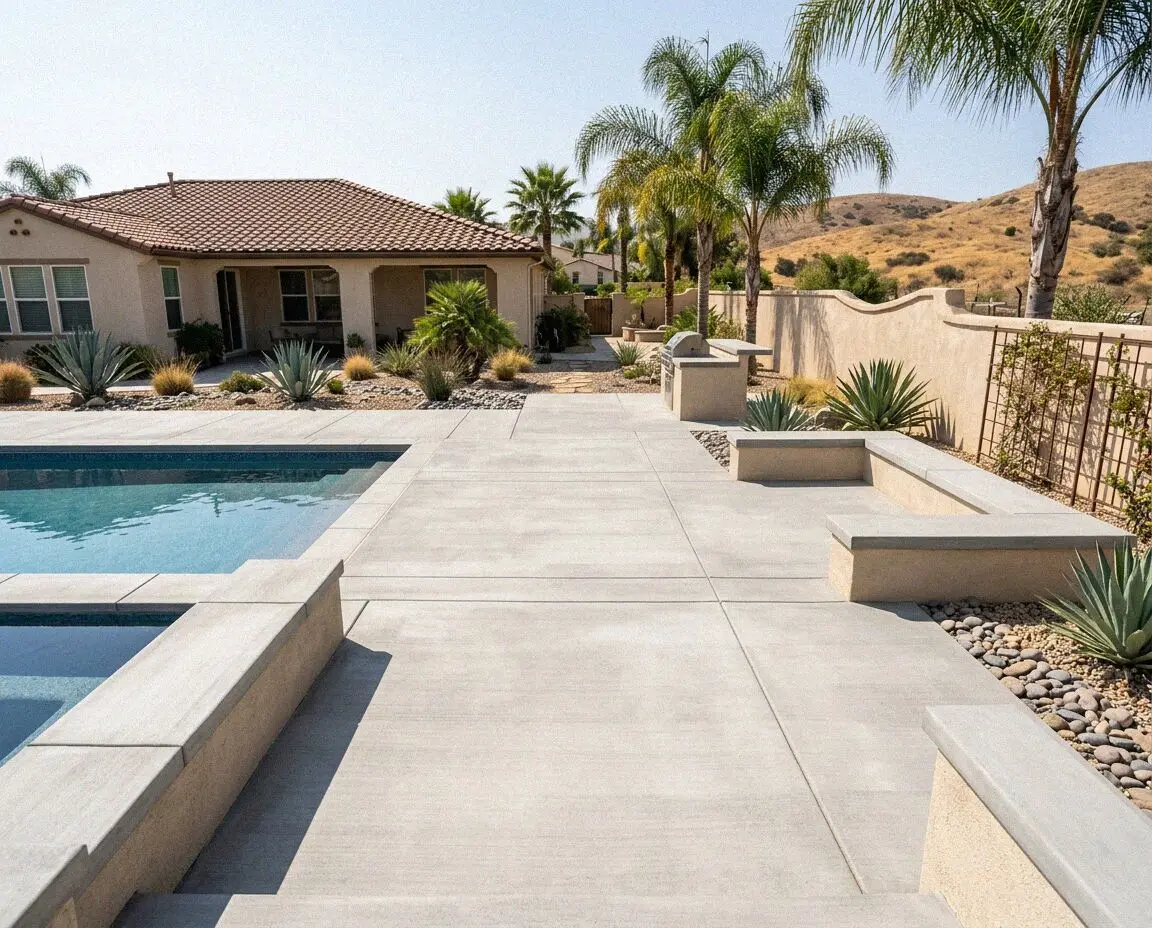
A new surround around a pool that stays, poured on fill dug and compacted, jointed at the coping and set to drain away from the water.
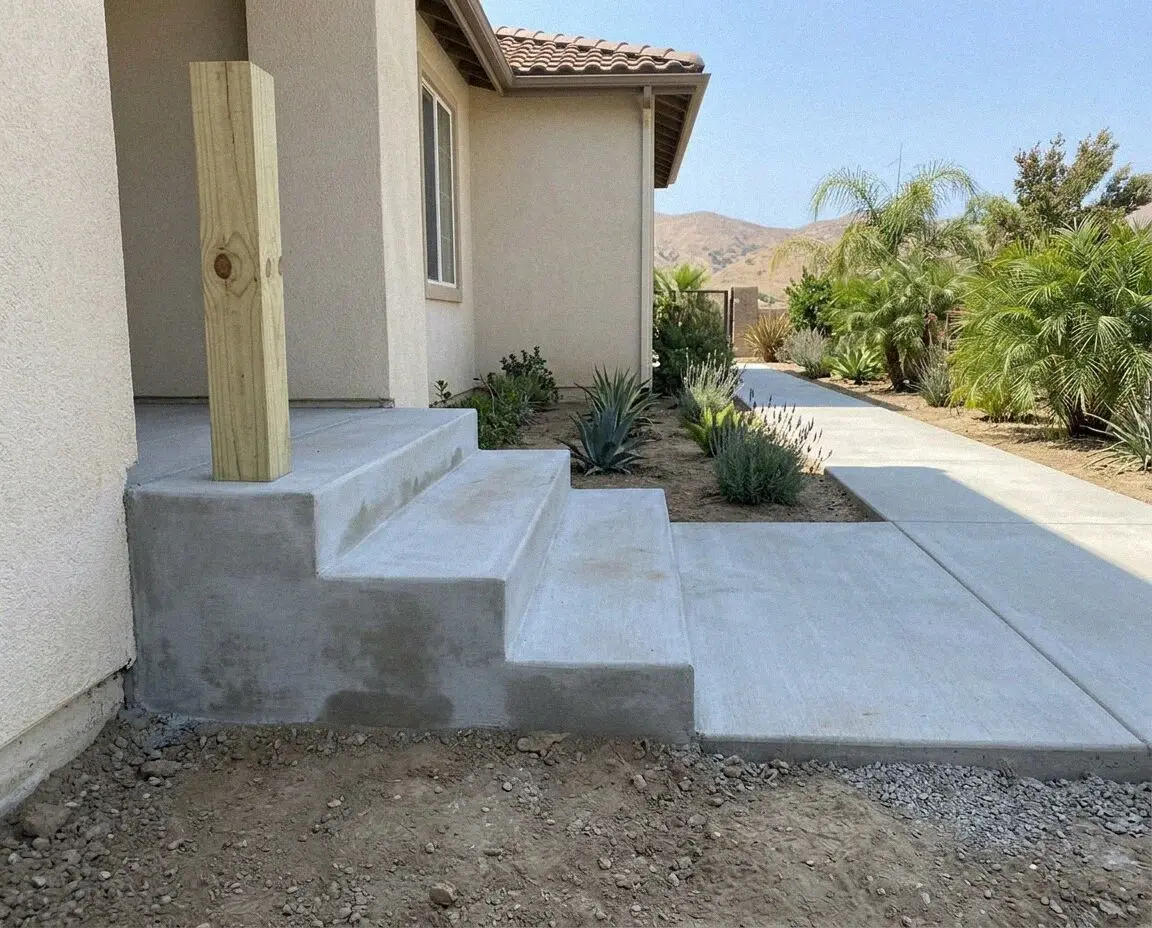
A flight poured as one block on its own footing, risers split evenly from the walk to the door and held there, treads pitched to shed rain.
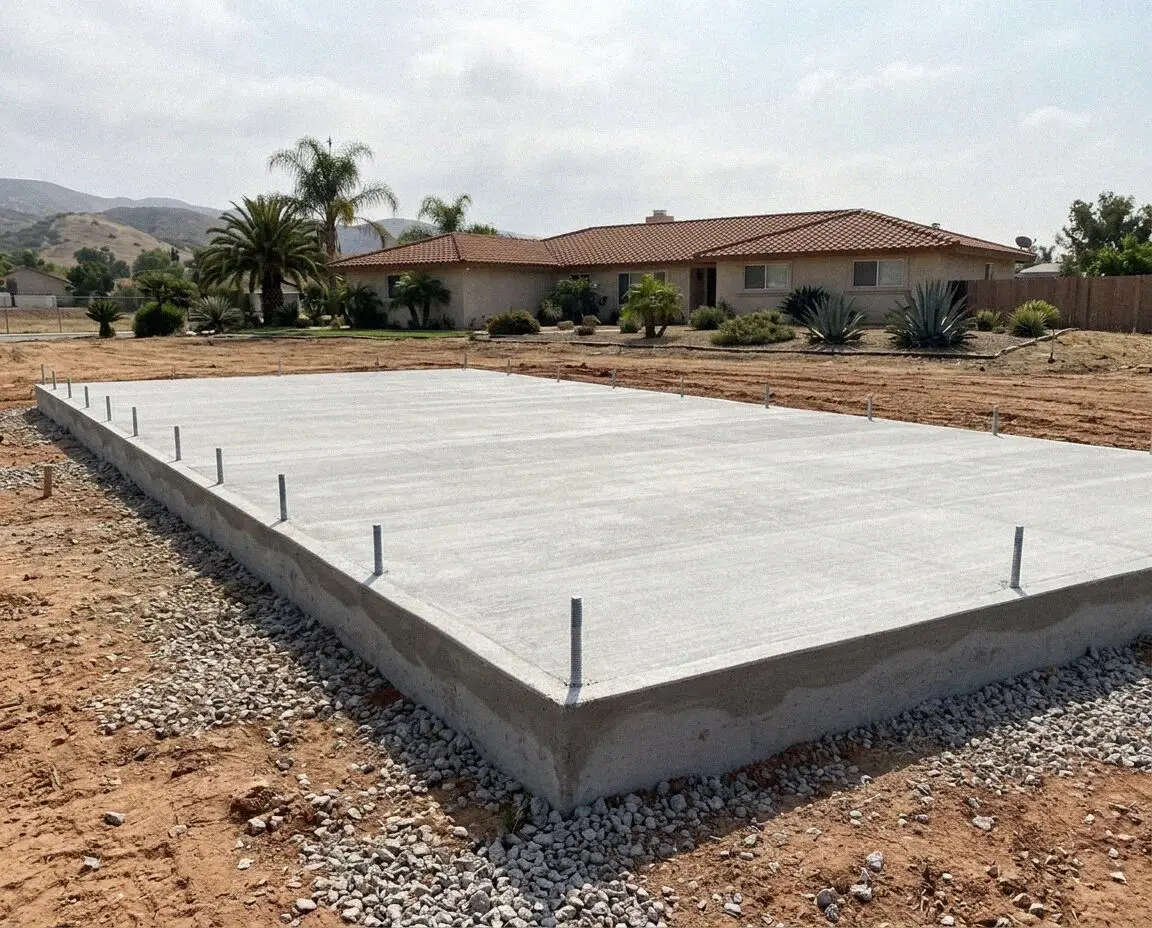
The one-piece foundation under a unit or a new room, with the drains, the sheet and the bolts placed before the pour, never reached again.
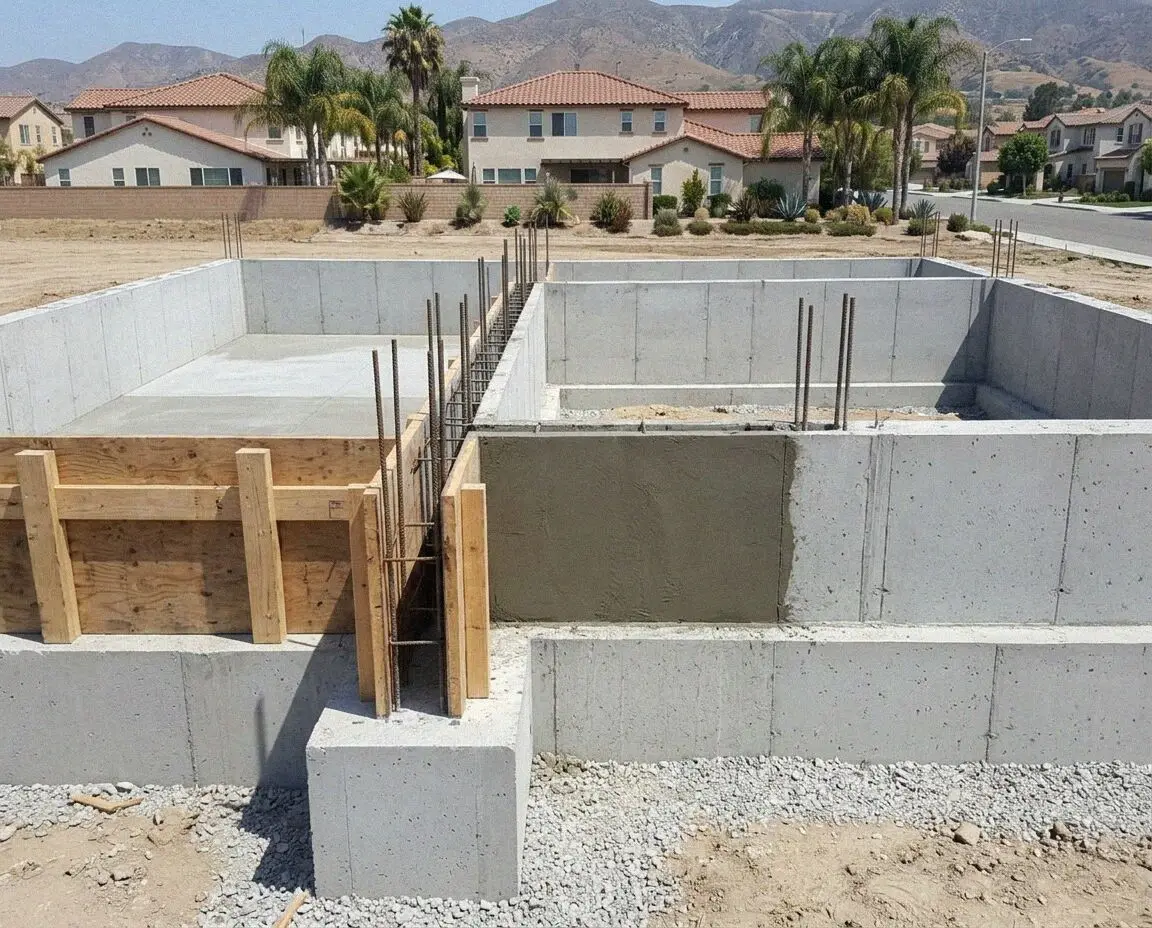
Footings, stem walls and piers for a wood floor over a crawl space, built to the height of the floor they meet and graded dry beneath.
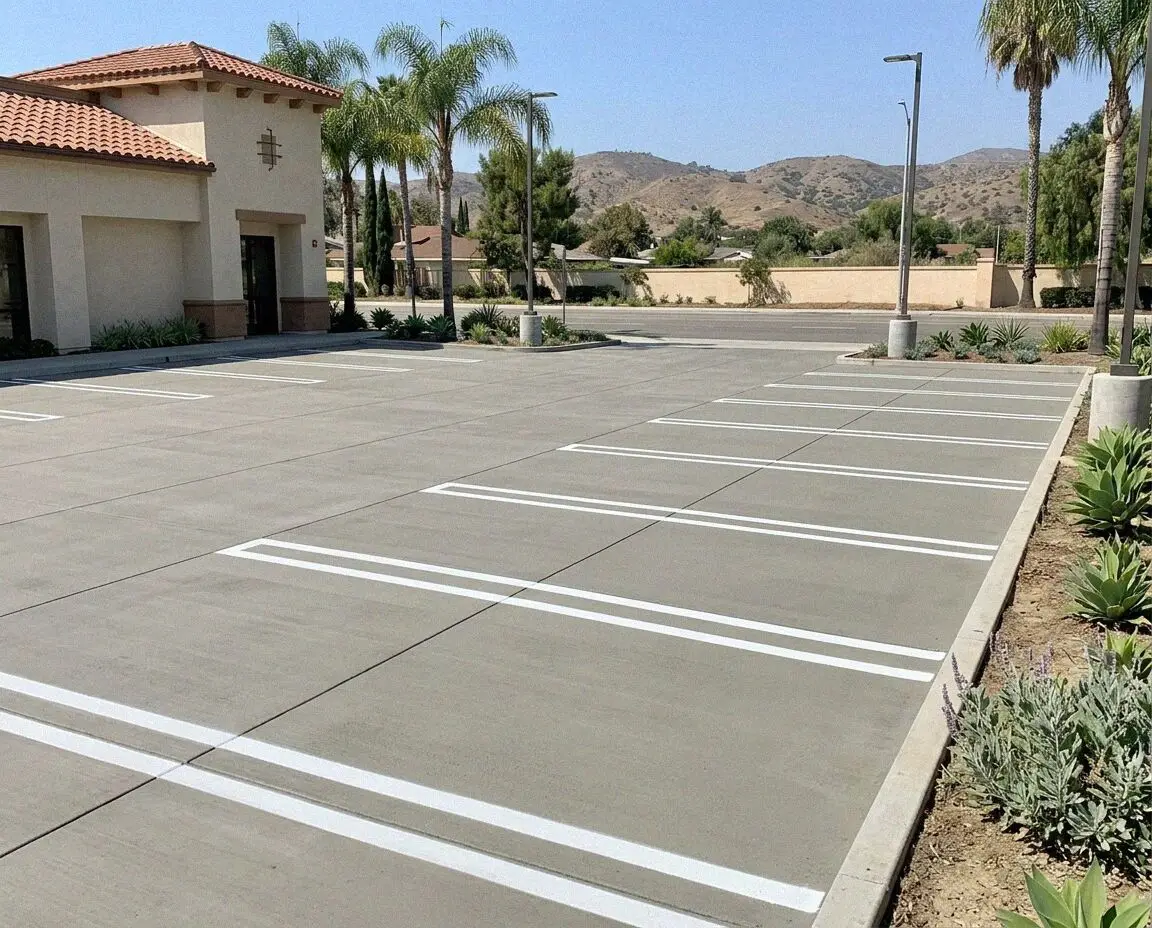
A commercial lot built for the truck that stops on it, thicker on its path, flat at the accessible stalls and phased so the doors stay open.
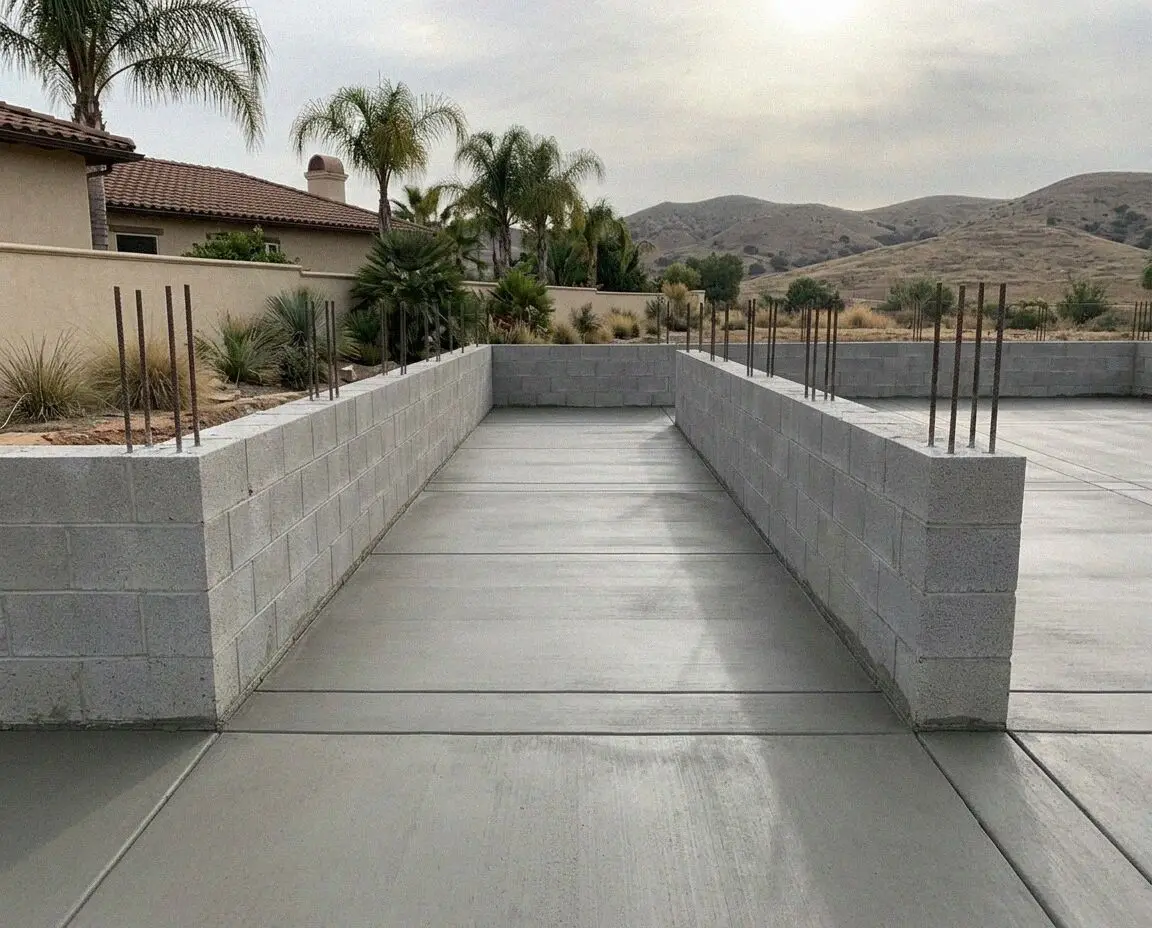
A footing dug to the depth of the old foundation and pinned to it with steel, inspected open, so an addition settles as one with the house.
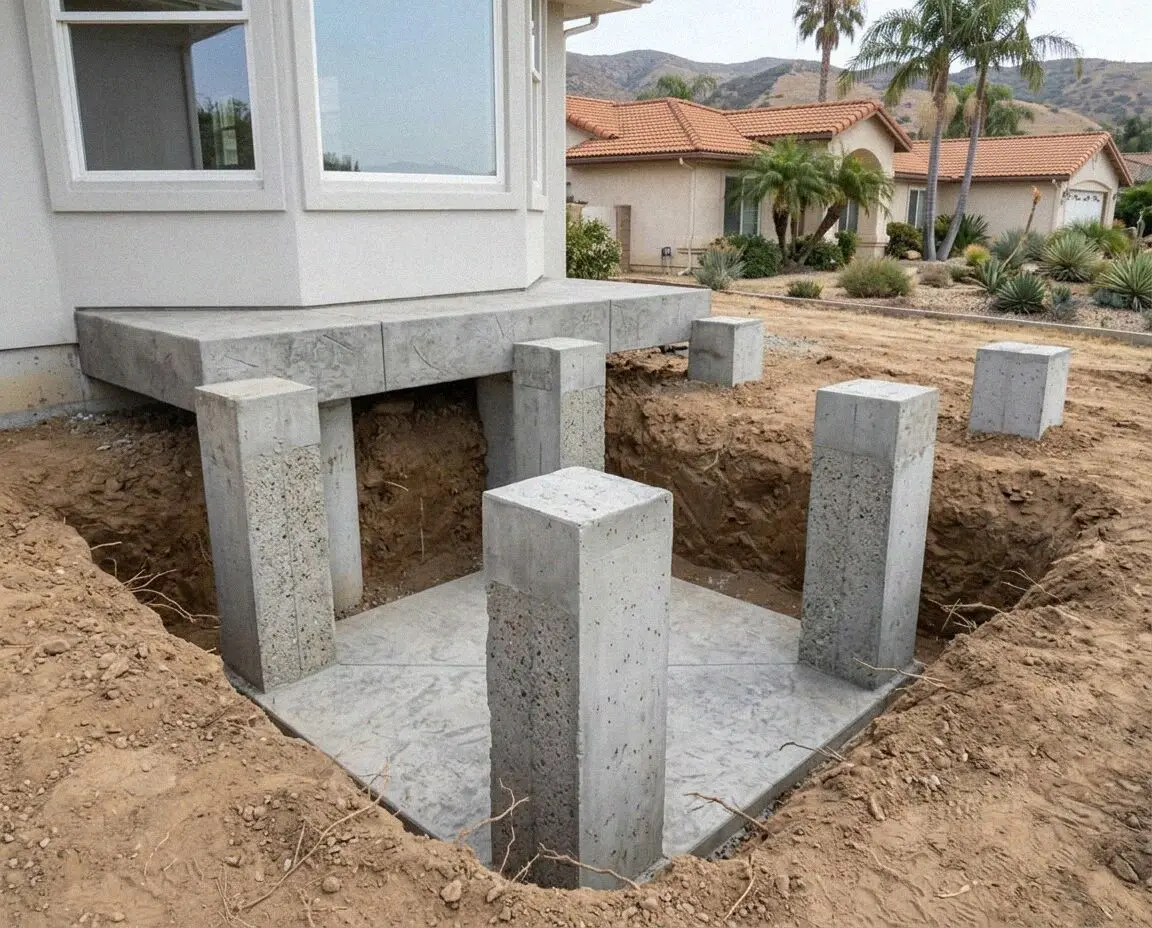
Floor bowed toward the middle? A raised-floor house is jacked from its own crawl space and set on new concrete piers, walls untouched.
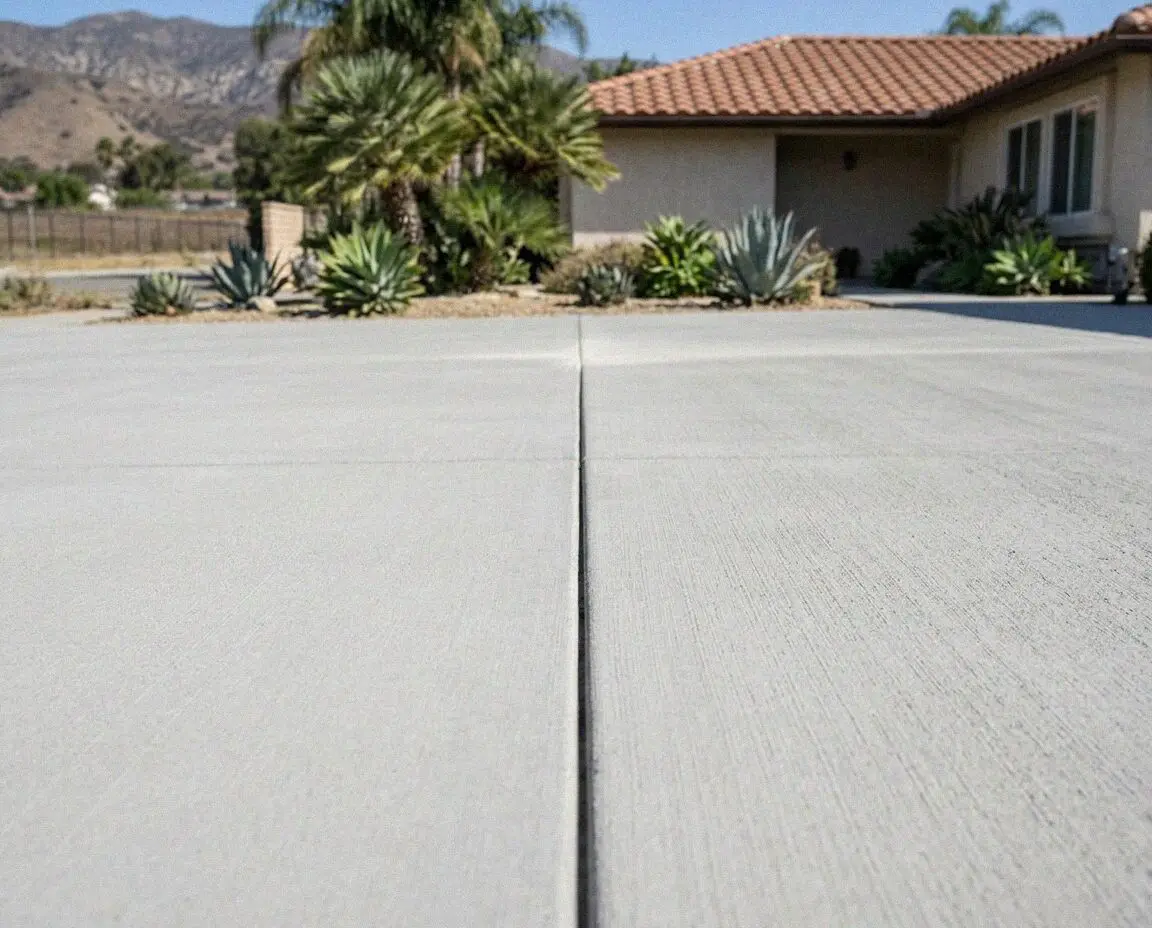
Need a slab opened without losing what is in it? Every cut here is scanned first, sawn wet to a set depth and closed with a flush patch.
Four steps, and nothing hidden between them. Step two is Curtis Ballard on your lot with a tape in his hand; by step three he is there when the concrete arrives.
Phone us, or fill the form in. You hear back within 1 business day, and the free measure usually lands in a slot inside the same week.
We read the fall, open a hole in the subgrade and hand you a sheet with break-out, base, pour, finish and haul-away priced apart.
With the sheet agreed we lodge whatever the city wants, hold a date, then break out, dig, compact, form, pour and finish it.
Everything off the site, then the two of us walk the slab against your sheet, depth, base, joints, edges, and it closes when you say.
We hold a C-8 Concrete classification with the California Contractors State License Board, and it is listed for anyone to look up. There is also liability insurance on every job, which counts on a 50-foot Old Towne lot where the saw runs a stride from the neighbor's porch.
Curtis Ballard opened the business in 2018 with 18 years on central Orange County crews behind him. Which alleys a mixer truck can turn in, what an Eichler slab hides and how long the Civic Portal takes to clear a submittal are things he found out the slow way.
The visit itself costs nothing. On the older lots here the first thing measured is the drop from the door sill to the gutter line, because a shallow fall is what puts water against a 1920s porch. Break-out, base, pour, finish and carting away are five separate lines.
You leave with a written workmanship guarantee against defects in how it was built. The call-back we get here is a panel lifted where a root was cut short of its barrier, and that one is ours. Ground that travels on its own, and the marks daily use leaves, are outside it.
Four things worth knowing (657) 236-3410 or send us a message.
Customer Reviews
Three jobs from the past two seasons, described by the customers who signed for them: one off an alley in Old Towne, one on an El Modena street, one on a slope up in Santiago Hills.
“Our drive goes right down the lot to a garage on the alley, and it had broken into about nine pieces. They took out 540 square feet, put five inches back and got the joints in before they left that evening. Curtis was here at seven for the pour.”
“Three of the pepper trees out front had lifted the walk into a trip hazard and the city had already been round. Seventy feet of panel came out, a barrier went in against each root plate, and the new walk has stayed flat through two winters.”
“The back of our lot falls away hard and the old patio had cracked right across the middle. They stepped the new one down in two levels, 380 square feet of it, and formed a drain along the low edge. Nothing has stood on it since, even in February.”
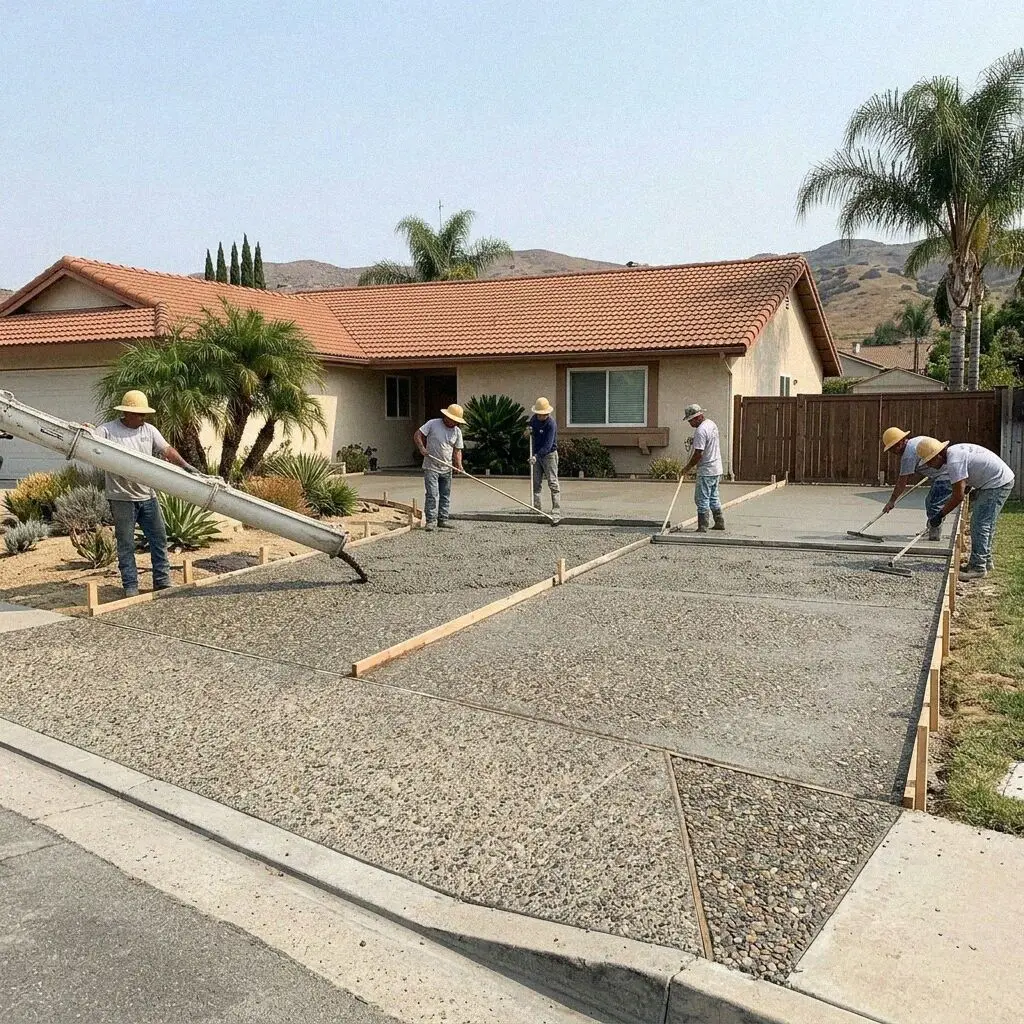
About Plaza Orange Concrete
Plaza Orange Concrete is a concrete outfit run out of Orange, CA. Curtis Ballard opened it in 2018 after 18 years working central Orange County crews, and today the business covers 20 towns spread across three counties either side of the Santa Ana River.
The city ran from a plaza laid out in the 1870s to a wall of post-war tract housing in about eighty years, then filled the eastern hills after that. So one week is a 1915 porch walk and the next is a 1965 carport slab, and the two want different things from a crew.
The C-8 Concrete classification is registered with the California Contractors State License Board, every job carries liability insurance on every job, and submittals go through the city's Civic Portal with one of us standing at the inspection. Every estimate is measured and written on site.
Our Specification
None of this loosens because a job is a small one. The old base comes out rather than being buried, depth follows whatever will stand on the slab, and nothing is left overnight without its joints in.
Six of them, on roads you pass most weeks: a drive off an Old Towne alley, a walk under the pepper trees in El Modena, a wall holding a slope in Orange Park Acres. Any one of them is two minutes off your route if you would sooner look than take our word.
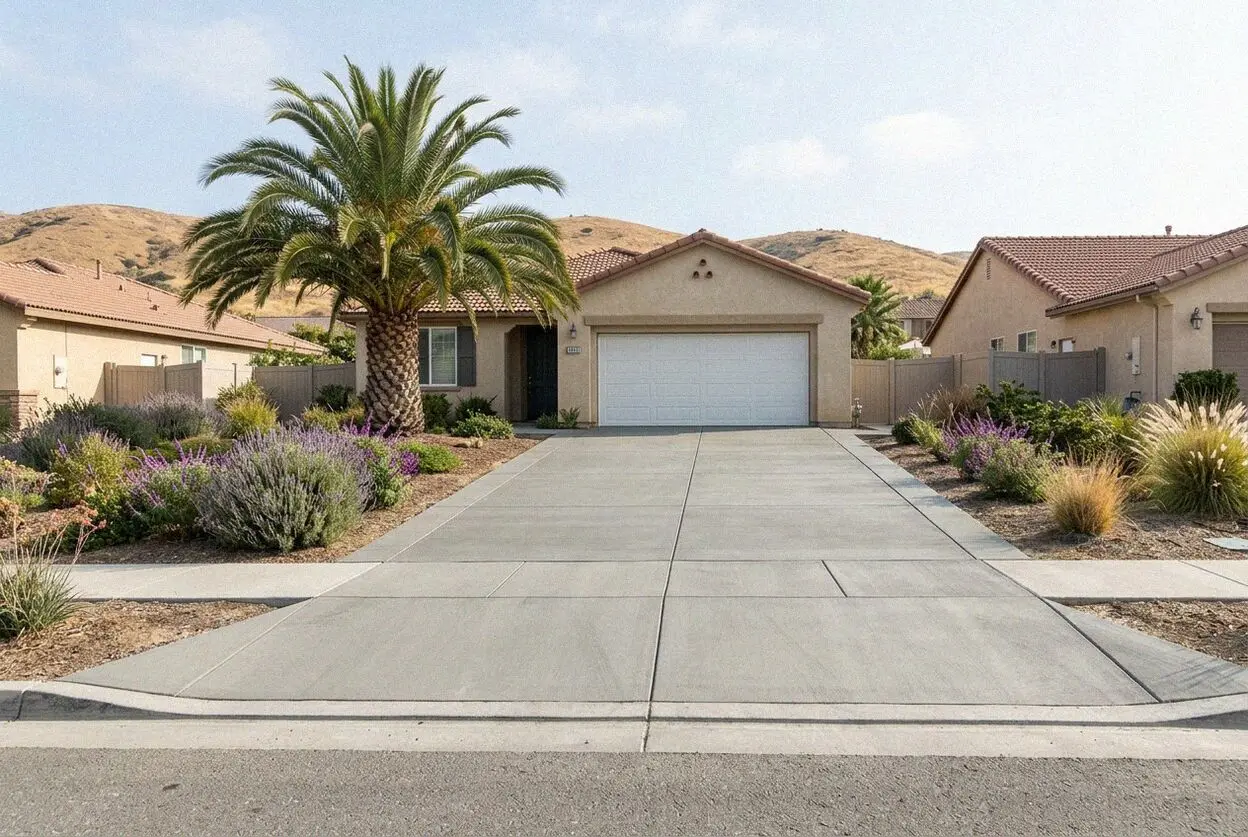
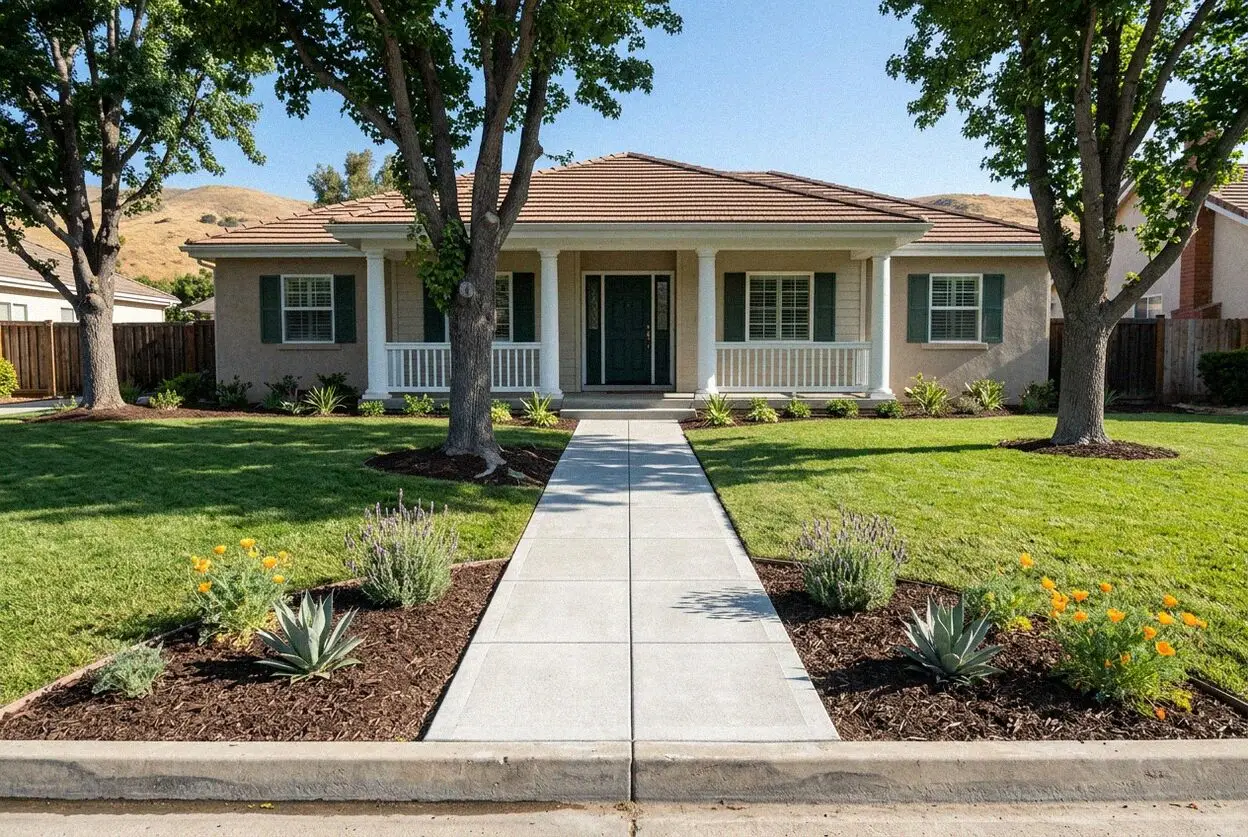
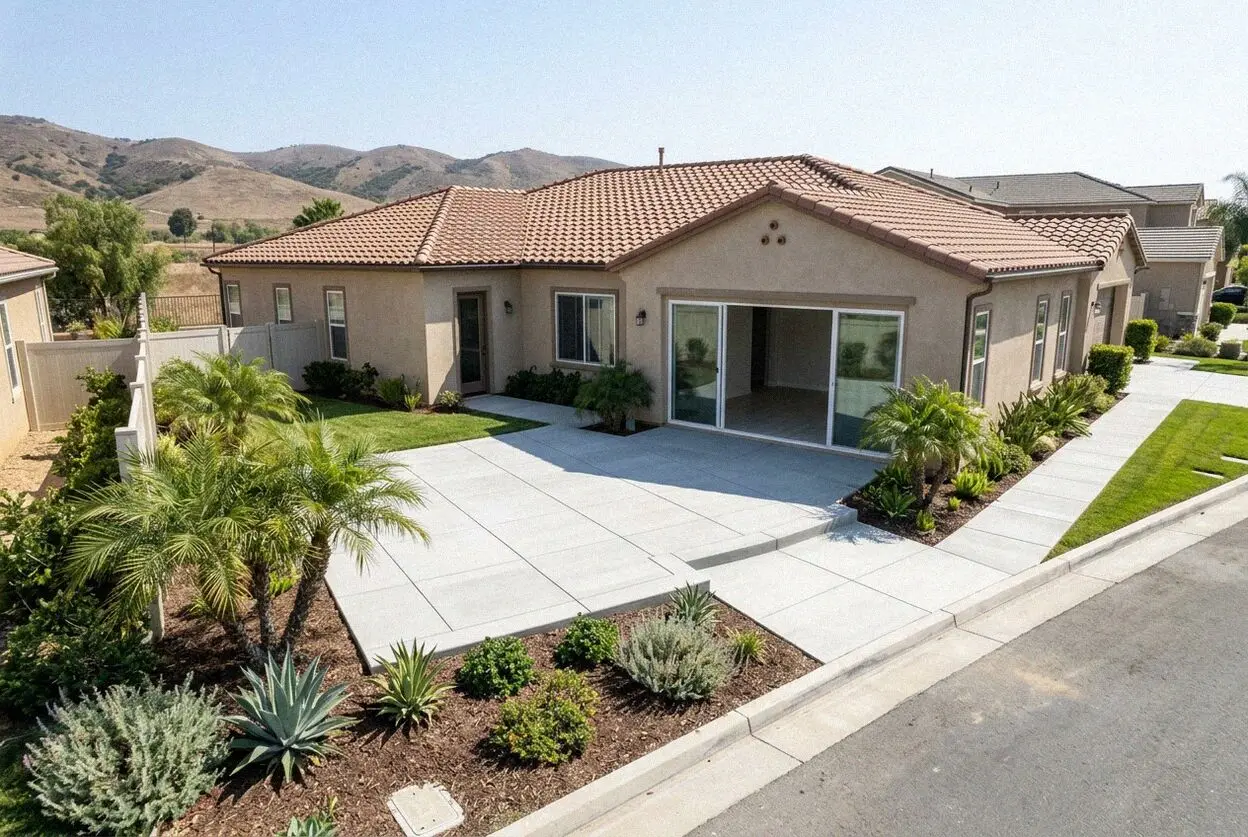
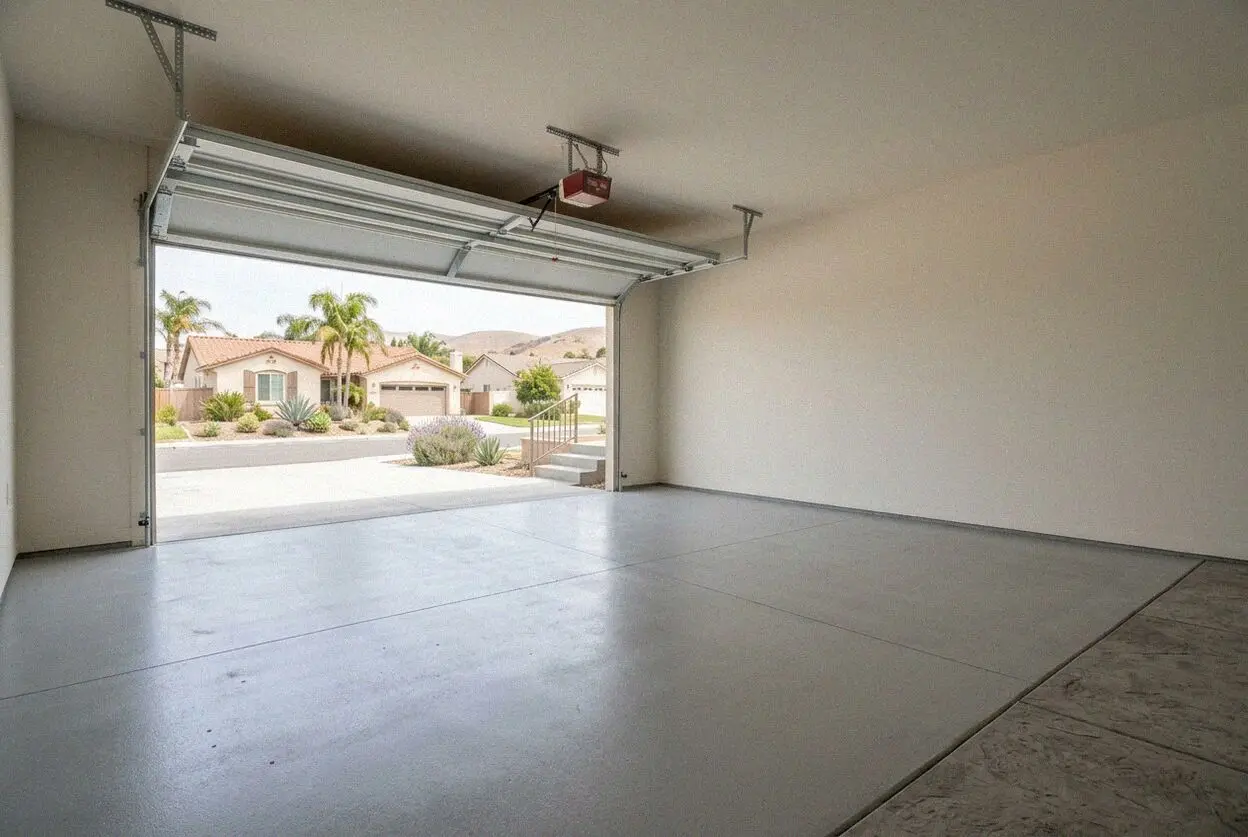
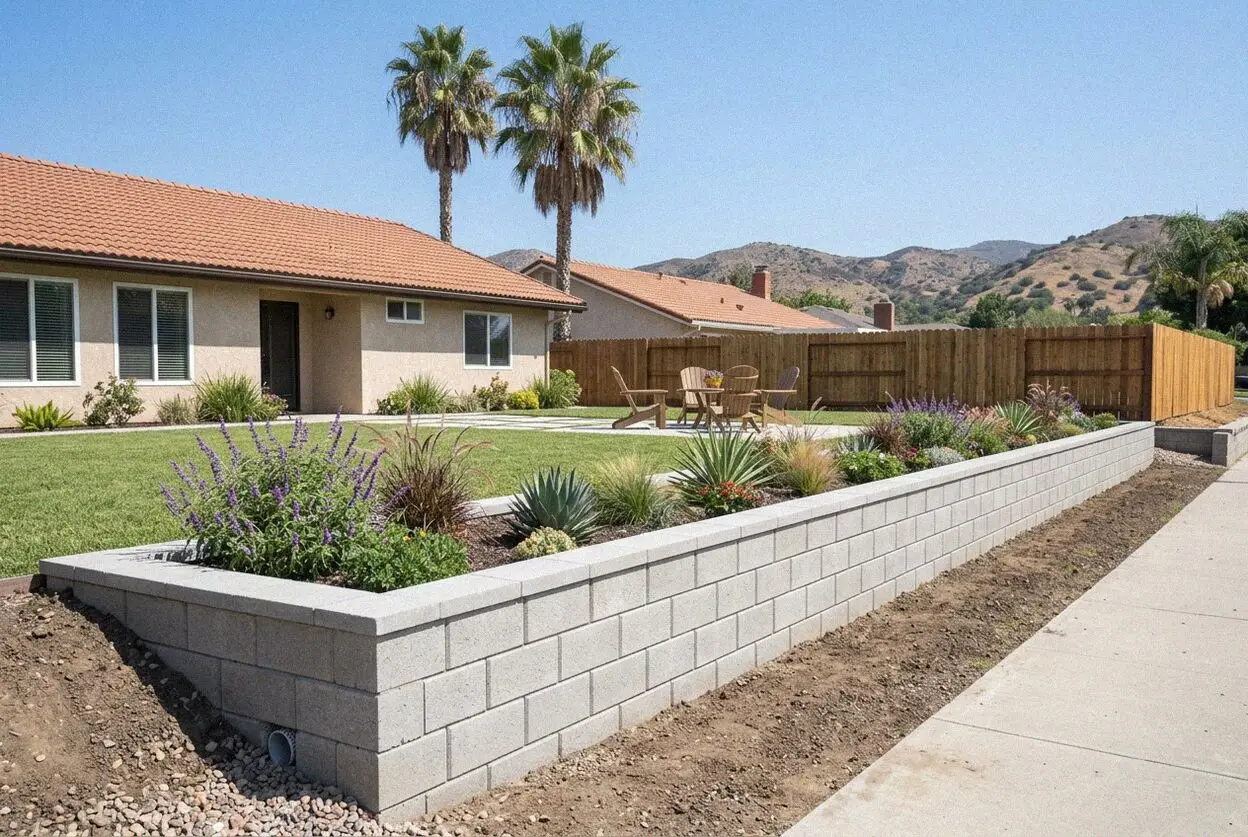
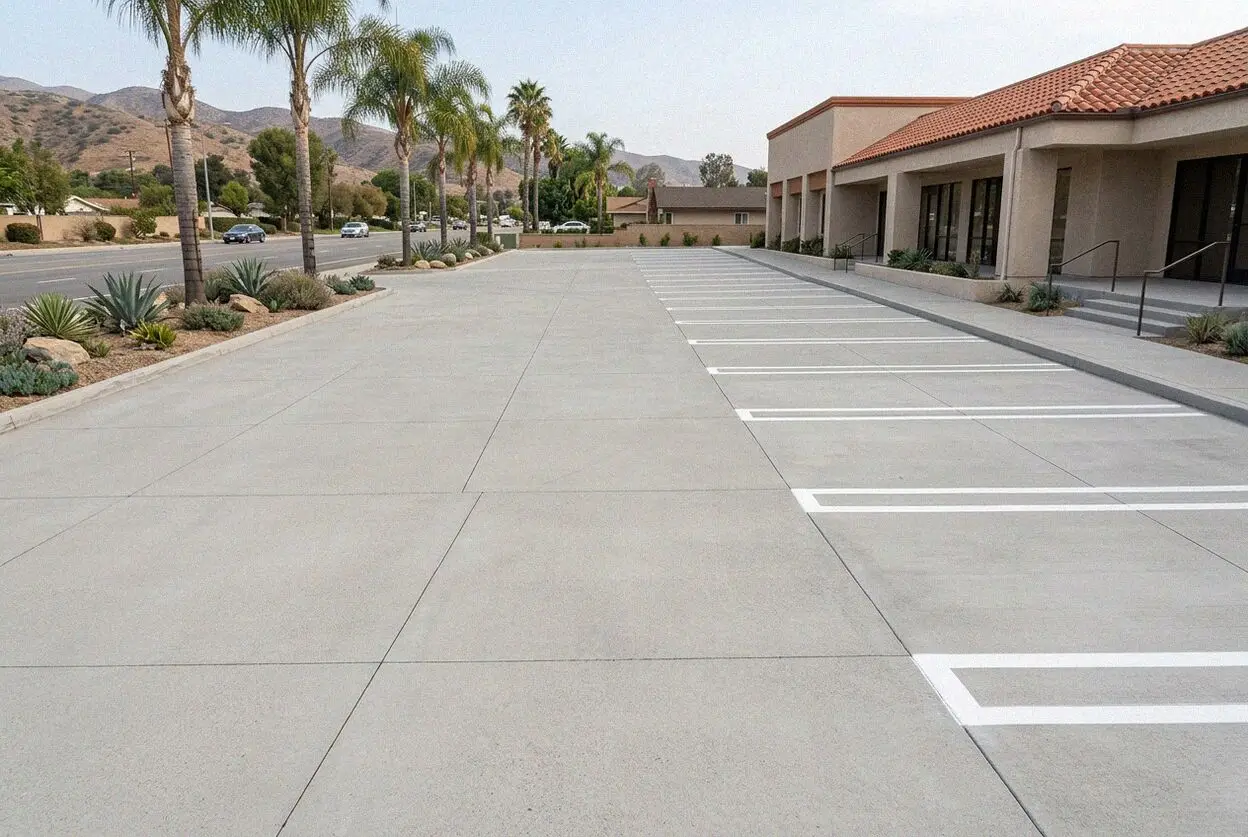
6 in throughout, 2,100 sq ft, laid across two nights

Curtis Ballard worked 18 years for other outfits before putting his own name on one in 2018, tract drives across the flat side of the city, front walks in the historic blocks, and a long stretch of hillside walls out east. The license sits in his own name. He lives a few streets from the office, takes every measurement personally, and is on site when the truck backs in.
What This City Is Built On
A downtown older than the county's freeways, a middle built in one post-war rush, and hills that came later. Each of the three wants something different before a truck is ordered.
Orange was incorporated on 6 April 1888, and the square mile around the Plaza is now the largest National Register historic district in California, listed in 1997 with the smaller Plaza district inside it from 1982. That is not trivia here: it means a good part of the concrete in the middle of the city is street-facing work on a lot the state has taken an interest in. Around it sits the post-war build-out, and beyond that the hill tracts and Orange Park Acres.
Ground through the center and west of the city is wash off Santiago Creek and the Santa Ana, sand and rounded gravel that drains well and compacts badly, unless the round stone is screened out and angular rock put back in its place. Go east past El Modena and the flat runs out: the slopes above Santiago Canyon are finer, tighter material that holds water and moves with it. The USDA Web Soil Survey has your block mapped, and it is two minutes well spent before anybody talks about depth.
Two counters, not one. The building permit comes from Building and Safety Services at 300 E. Chapman Ave, and applications are taken only through the city's Civic Portal. Work past your property line, the parkway, the drive approach, the walk in front of it, runs on an encroachment permit issued by the Director of Public Works under Municipal Code 12.64, and if your street is inside the pavement moratorium the cut is restricted on top of that.
Most drives in this city are narrow, long and shared with a street tree, and that is what decides it: a slab spans a root that has lifted the ground under it, where asphalt telegraphs the bump and a paver field simply follows it up.
| Option | Lifespan | Back in use | Upkeep | On an Old Towne lot |
|---|---|---|---|---|
| Poured concrete | 30-40 years | On foot after 48 hrs, cars at 7 days | Reseal every 2-3 years | Bridges a root; design standards allow a plain gray finish |
| Asphalt paving | 15-20 years | Cars back on in 2-3 days | Sealcoat every 2-3 years | Reads every root under it and goes soft in a Santa Ana |
| Interlocking pavers | 25-50 years on a built base | Walk on it the same day | Re-sand joints every 1-2 years | Lifts one unit at a time, so a root shows up early |
Laying asphalt costs least and keeping it costs most; pavers do the reverse. Concrete falls between them, and it is the one that holds a line past a tree.
Yes. Any change to the exterior of a property inside Old Towne has to meet the Historic Preservation Design Standards for Old Towne, and that reaches the drive, the front walk and the porch steps. We take the finish through Planning on a Minor Design Review before ordering.
Because the Eichler tracts here, Fairhaven, Fairhills and Fairmeadow, all three local historic districts since 2018, were built with the heating pipework cast into the floor slab. A saw or a core through one is a wet, expensive afternoon, so the runs get traced first.
Street trees planted eighty and ninety years ago, whose roots now sit directly under panels four inches thick. Grinding the lip buys a year or two. Taking the panels out, pruning back to sound wood and standing a barrier between root and walk is what actually holds it flat.
A curing slab shrinks, and it parts somewhere; the cut decides where. Panels are sized at 24 to 36 times the slab thickness, about 10 feet across on a 4-inch pour, and kept near square, because a long thin bay splits across its middle regardless.
Whatever is going to sit on it. 4 inches takes people and cars, 5 to 6 inches takes a truck, a trailer or a horse box. Depth is the one line on an estimate nothing puts right afterward, and an inch light will crack under ordinary use inside a few years. Yours is on the sheet.
It changes the shape of it. An alley-fed lot means a run of concrete the whole depth of the property, which is more square footage, more joints and a truck that has to reach the far end. We pour those in bays so the far half is not walked over before it has set.
Depth, base, joints, sealing, the two permit counters, timing, and what is still covered once the crew has gone, answered for this ground and the age of what is already on it.
Nobody prices this off a description, and depth moves the number more than anything: take a 4-inch slab to 5 and you are buying a quarter again in material, with more rock underneath it. Then comes how much has to be broken out, whether the water needs somewhere to go, and the finish you pick. The visit that measures those four is free.
Three things: how big it is, how deep it goes, and what the old slab has been lying on all these years. A 1950s frontage over clean creek wash digs out quite differently from an Old Towne run to a rear garage with ninety years of patching beneath it. That gap shows in the break-out and base lines, never in the concrete.
By size, by access and by finish, over 4 inches of slab on compacted rock. Access swings it hardest in this city: a gate at the side that a power buggy fits through is one job; a garden you can only reach by walking through the living room is barrow work, and barrows cost hours rather than material. Color or a stamp adds a day for the sealer.
Cars need 4 inches. Anything heavier, a truck, a trailer, a horse box, wants 5 to 6, and the last of those comes up often enough out in Orange Park Acres to be worth raising early. Nothing gets depth back after the pour, which makes it the one line on a sheet never to shave. Yours is written before you sign.
Nearly always. The slab only carries what is underneath it, and most of what goes wrong starts under the pour rather than in it. Clean angular rock, compacted in layers, spreads load and lets water leave. Creek wash will not do that on its own, because rounded stone rolls under pressure instead of locking together.
They pick where it goes rather than preventing it. A curing slab shrinks and parts somewhere, so the panels get sawn in at roughly 10 feet apart on a 4-inch slab and the crack follows the line down. Timing is the whole trick: cut on the day, the line disappears into the finish; cut a week on, the slab has already chosen its own route.
It can, and the answer changes with the address. West and central, the risk is voids left behind where rounded creek stone was never screened out of the base. East of El Modena, on the slope ground, it is finer material that swells through the wet season and shrinks back after it. What is under your slab gets settled the day we open a hole in it.
October to May is the comfortable window. July and August afternoons here sit in the mid to high 80s, a good few degrees off the valleys inland, but dry, and dry air lifts water off the top of a slab before it has any strength. We pour all summer regardless, on site before 8 AM, and keep it damp through the 7 days of wet curing the Portland Cement Association asks for.
Yes, and sooner on anything that faces south or west. Bare concrete is porous, so oil and rust sink in and the mark stays; sun fades color and stamp work faster than most people expect. Reseal every 2 to 3 years. On a historic block a sealer that leaves a gloss is also the wrong choice, so we use a matt one.
Allow 3 to 5 days with a crew on your property for a house job, with the cure carrying on once they have gone. Older lots spend the first two of those on demolition and digging, which is the stage that moves about. You are on foot at 24 to 48 hours, parking at 7 days, and anything heavy waits for 28.
Inside your own lot line, usually none, the California Residential Code exempts drives and walks on grade, though it never names a patio slab. Cross onto the parkway, the approach or the public walk and it is an encroachment permit from Public Works under Municipal Code 12.64. A wall over 4 feet from the base of its footing takes a building permit of its own, and Old Towne adds design review over the finish.
Every job leaves with a written workmanship guarantee against defects in how it was built. What that covers is set out on the estimate you put your name to, the base, the depth, the joint layout, the finish. Staining, ordinary wear, and ground that travels further than the joint spacing was meant to absorb all fall outside it, and those are written down just as plainly.
Service Area
The van goes out across central Orange County and beyond it, and these are the towns we are in most weeks, streets we know, ground we know, counters we know. Choose yours from the list, or phone and we will say straight off whether your street sits inside it.
 Open the Orange Office in Google Maps
 Call, or put the form in, and you hear back within 1 business day. Curtis Ballard drives out, measures the work, reads where the water goes, and the figure is written before he gets back in the van. Nothing is priced off a photograph.