Serving Orange, CA and surrounding areas.(657) 236-3410
Plaza Orange Concrete

Concrete Parking Lot Building in Orange, CA, Built for the Truck at the Enclosure

Plaza Orange Concrete pours the small lots on Tustin Street and Chapman, where the refuse truck outweighs every car, so the depth follows the truck. Every estimate is measured and written on site.

Google reviewsFacebook reviewsBetter Business Bureau reviews5.0 Stars Rated by our customers · Google, Facebook and the BBB
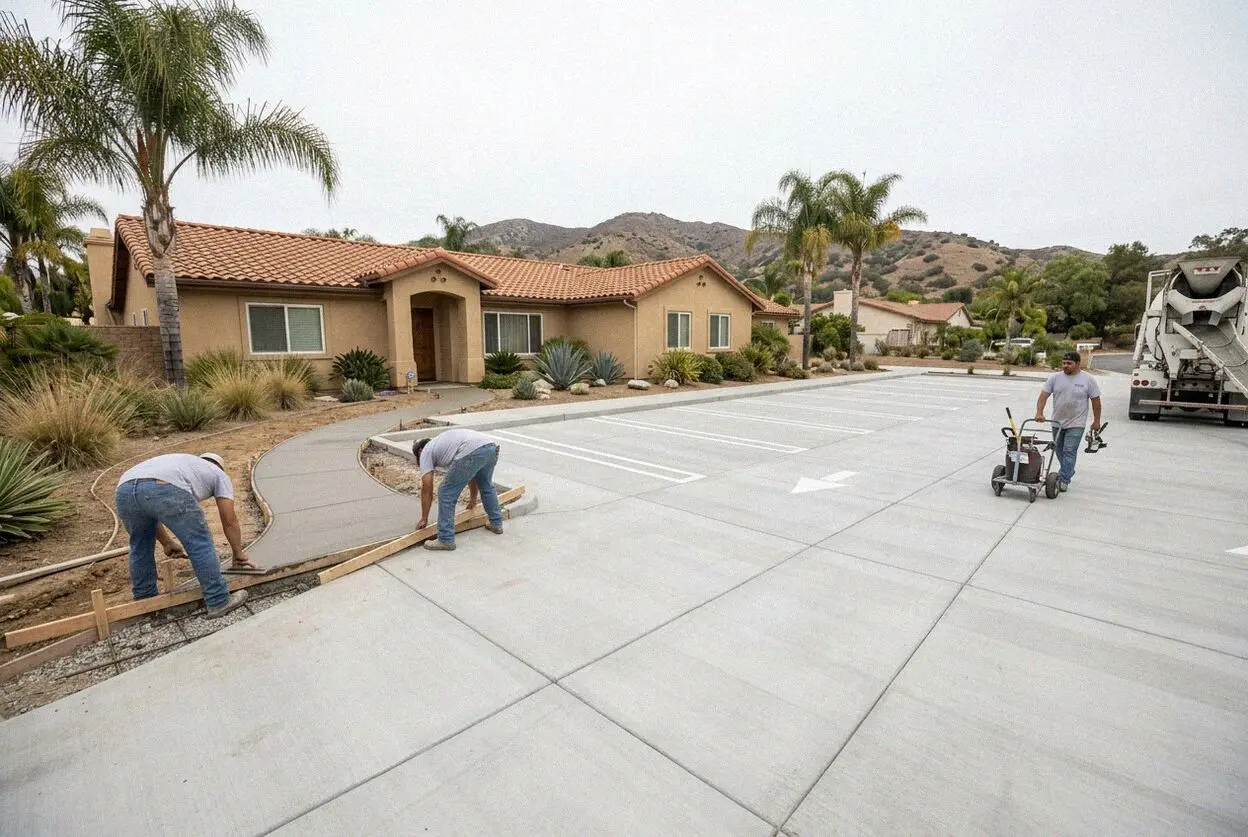
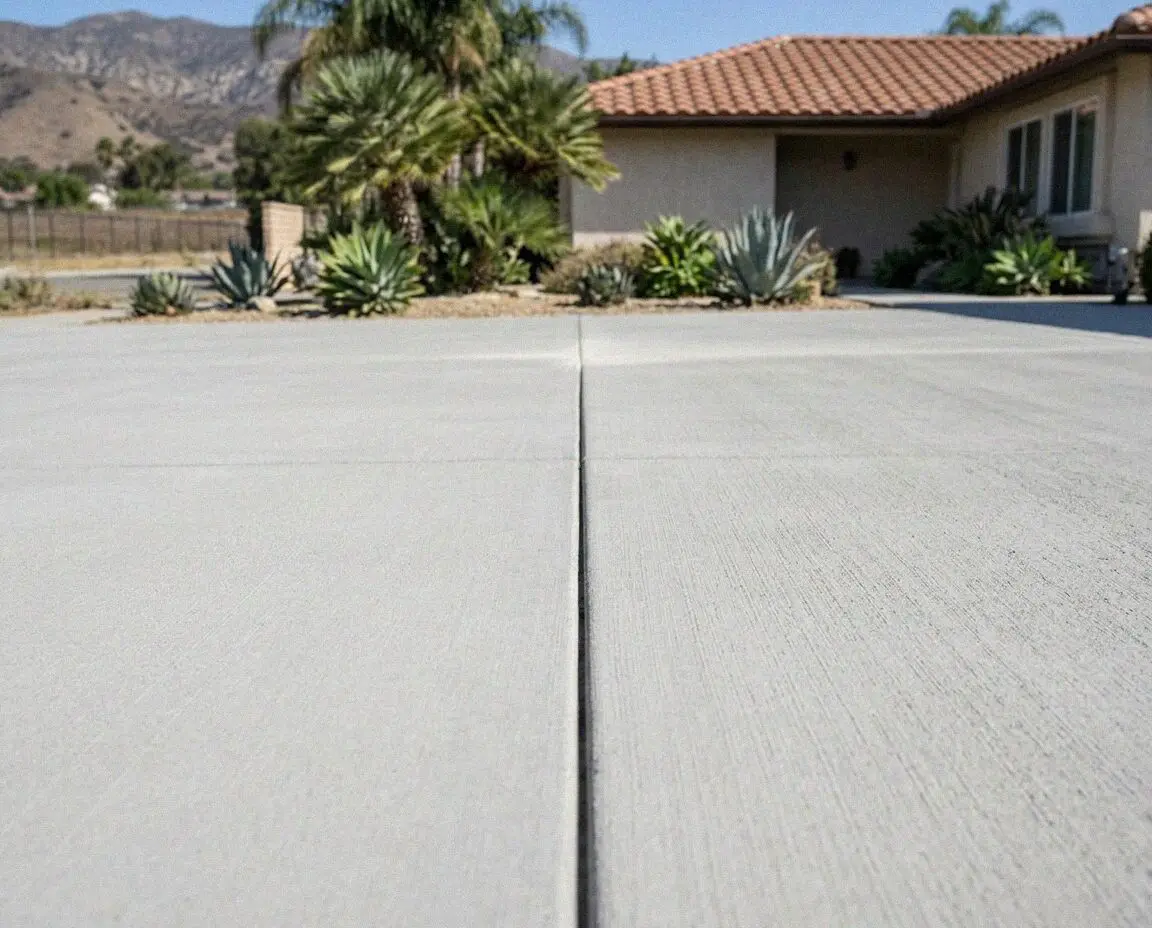
Crew screeding a concrete parking lot pour at a shop frontage in Orange, CA
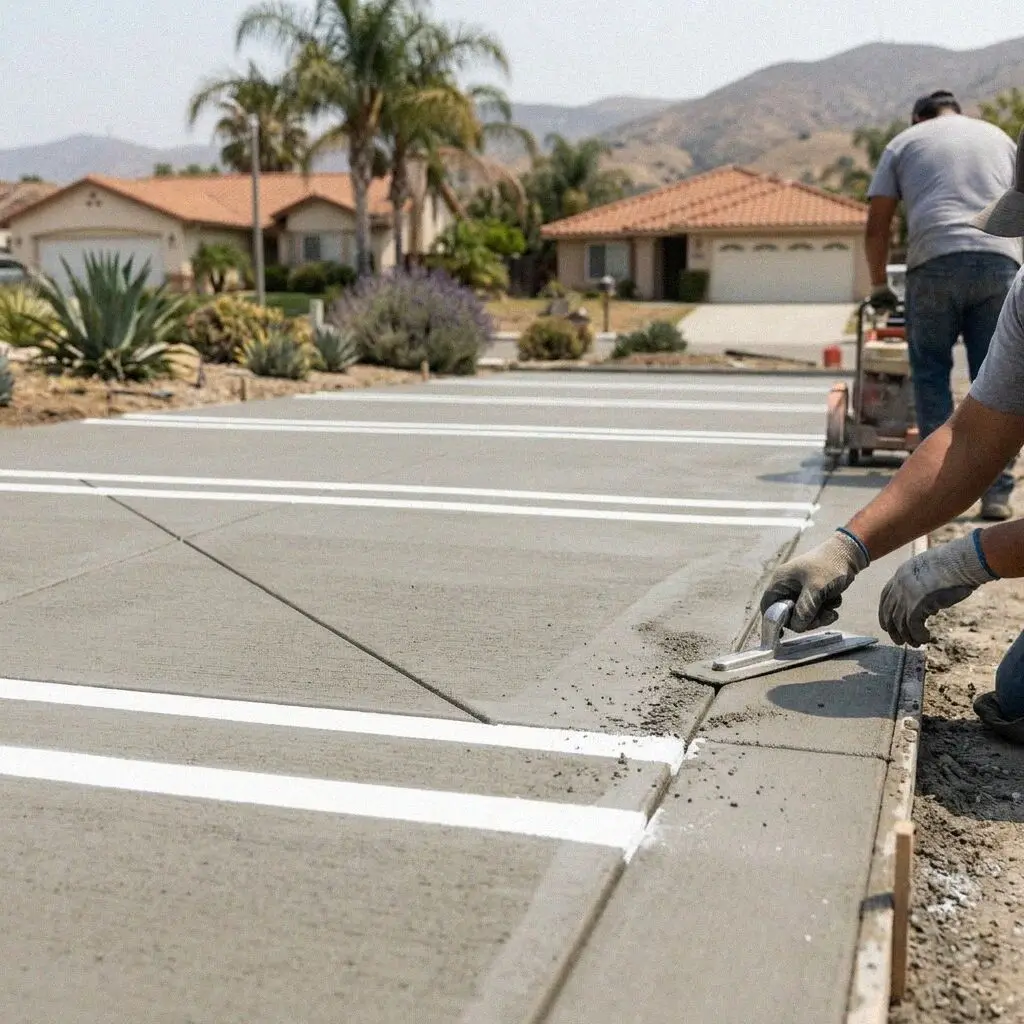
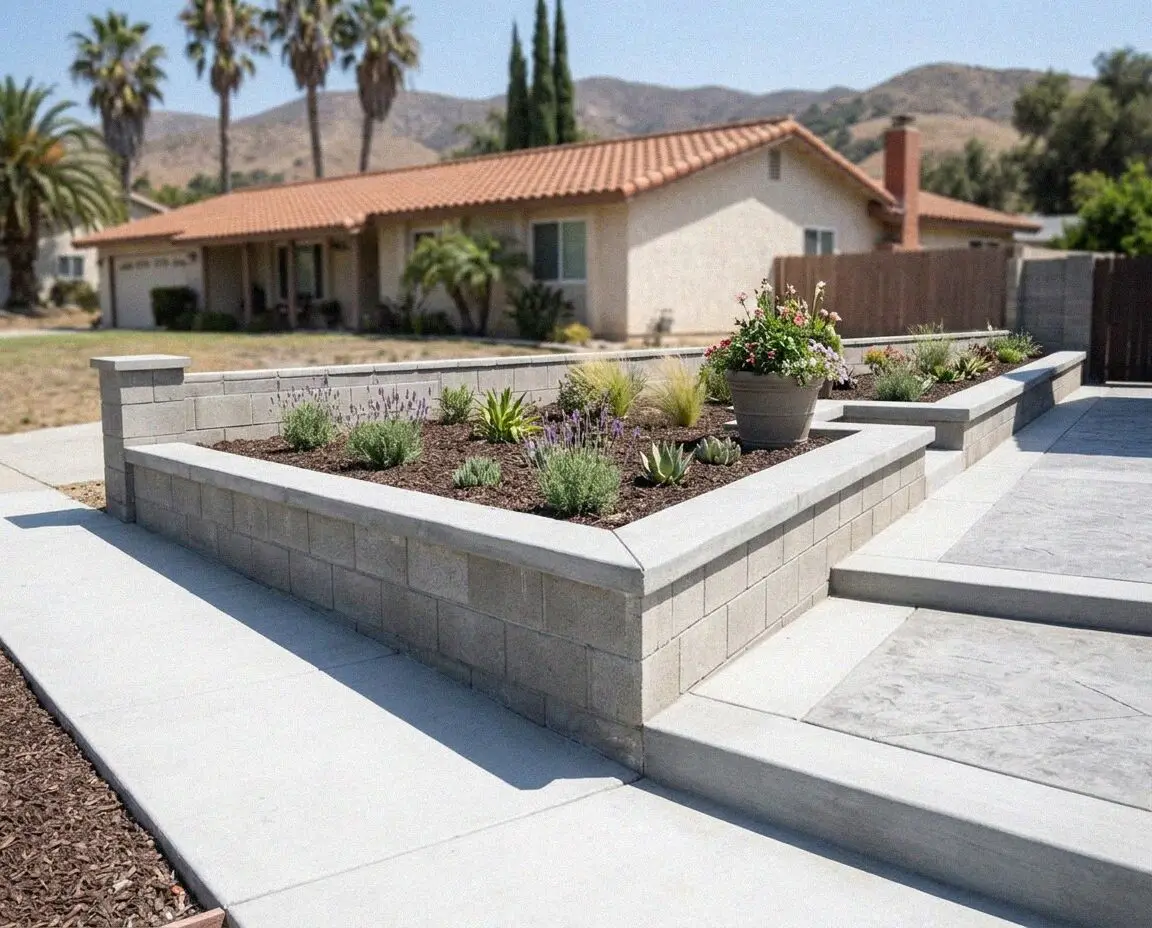
Hands cutting a joint into a fresh parking lot slab in Orange, CA

How a lot is built here

Pouring a Parking Lot on an Orange, CA Frontage

A retail lot fails at the trash enclosure and the back door, never in the stalls. A car puts about half a ton on each wheel; a loaded refuse truck puts nine tons on one axle and stops in the same spot twice a week for the life of the slab. Build the aisle to the enclosure and the delivery apron on a rebar mat at 6 inches, leave the stalls at 5 on mesh, and the lot outlasts the tenants twice over. Pour it all at one depth and the heavy corner cracks inside three winters.

Plaza Orange Concrete has poured these lots since 2018, when Curtis Ballard opened the yard after 18 years on central Orange County flatwork crews, and he sets out every truck path himself before a form goes down. Most lots on the corridors here are asphalt laid in the 1970s and 1980s over whatever the grader left, patched a dozen times since. What they have going for them is the ground, sand and gravel that bears well once the round stone is dealt with.

Lots are built to the California Building Code under a CSLB C-8 concrete license, with liability insurance on every job, and the accessible stalls and the route from them follow Chapter 11B, which holds each of them to a slope of 2 percent or less in any direction. The permit is drawn from Building and Safety Services, the approach across the sidewalk from Public Works, and the finished lot carries a written workmanship guarantee against defects in how it was built.


Patch or rebuild

When is a parking lot in Orange, CA past patching?

Ruts at the trash enclosure

Twin grooves running up to the enclosure gate are the refuse truck's wheel paths pressed into asphalt that was never built for it. The base underneath has been kneaded loose along the same two lines. A patch on top sits on that loose base and takes the same truck the following week.

Alligator cracking in the aisle

A net of connected cracks across the drive aisle means the pavement is flexing over a base that has lost its strength, usually because water got in through the first cracks. Sealcoat fills the pattern for a season. By the next summer the pieces are loose and the net has grown.

Water standing in the ramp stall

A puddle that lasts a day in the stall beside the ramp means the slope has been lost, and Chapter 11B allows 2 percent there and no more. A settled stall is a failed inspection waiting for the next tenant improvement. Grinding it flat thins a slab that was already too thin.

The apron dropping at the back door

A step opening between the loading apron and the building's slab means the apron has settled and the building has not. Box trucks backing to that door hit the lip every time and break the edge back further. Once the apron is below the door sill, rain runs in under it.

In every lot

What Goes Into a Parking Lot in Orange, CA

Eight things come with every lot and none is a separate line on the estimate. Each answers something a corridor lot here does: a heavy truck on a fixed path, cars everywhere else, a sidewalk to cross, and a tenant who cannot lock the doors for a week.

Asphalt milled and hauled

The old asphalt is milled off and hauled for recycling, and any old concrete islands and wheel stops go with it, down to the grader's surface.

Ground proved on the route

The subgrade is tested along the refuse route and at the delivery door with a plate, because that is the one line the design cannot forgive.

Angular base, compacted

Crushed aggregate base goes in over the wash sand in two lifts and is compacted, because round river gravel rolls under a plate and never locks.

Two depths, on the plan

6 inches on a rebar mat along the truck path and the apron, 5 inches on mesh through the stalls, with the line between them drawn before the pour.

Accessible stalls to 11B

The accessible stalls, their access aisle and the route to the door are set to 2 percent or flatter with a level before the pour and checked after.

Joints on a square grid

Saw cuts go in the same day at panels no wider than 12 feet, laid out so a joint falls at every column, island and drain rather than beside one.

Fall to a drain or street

The grade is shot so the whole lot sheds to a catch basin or the gutter, and the parkway drain or approach is permitted through Public Works.

Striping and the guarantee

Stalls, the accessible symbol and the fire lane are painted once the slab has cured 28 days, and the written guarantee is handed over at the end.

How it can be built

Parking Lot Builds in Orange, CA, Compared

Four ways to build a lot on a corridor frontage here, set against the heaviest vehicle that uses it and how long the business can spare its parking. The base and the drainage are the same in all four; the table is about the slab.

OptionSuitsSteel in itLifeBack in use
5-inch slab on meshCars only, no refuse truck on itWelded mesh at mid-depth25 to 30 years7 days for cars
Two-depth slabShops and clinics with an enclosureNumber 4 rebar mat on the truck path30 to 40 years7 days for cars, 28 for the truck
Concrete aisle onlyA lot rebuilt in phasesRebar mat through the aisle only30 years on the aisle3 days for cars
7-inch loading apronA dock or a daily box truckTwo mats of number 4 rebar40 years or more28 days before the first truck

Concrete costs more to lay than asphalt and least to keep, since it is never sealcoated; the two-depth slab adds little and is the one part nobody can add later.

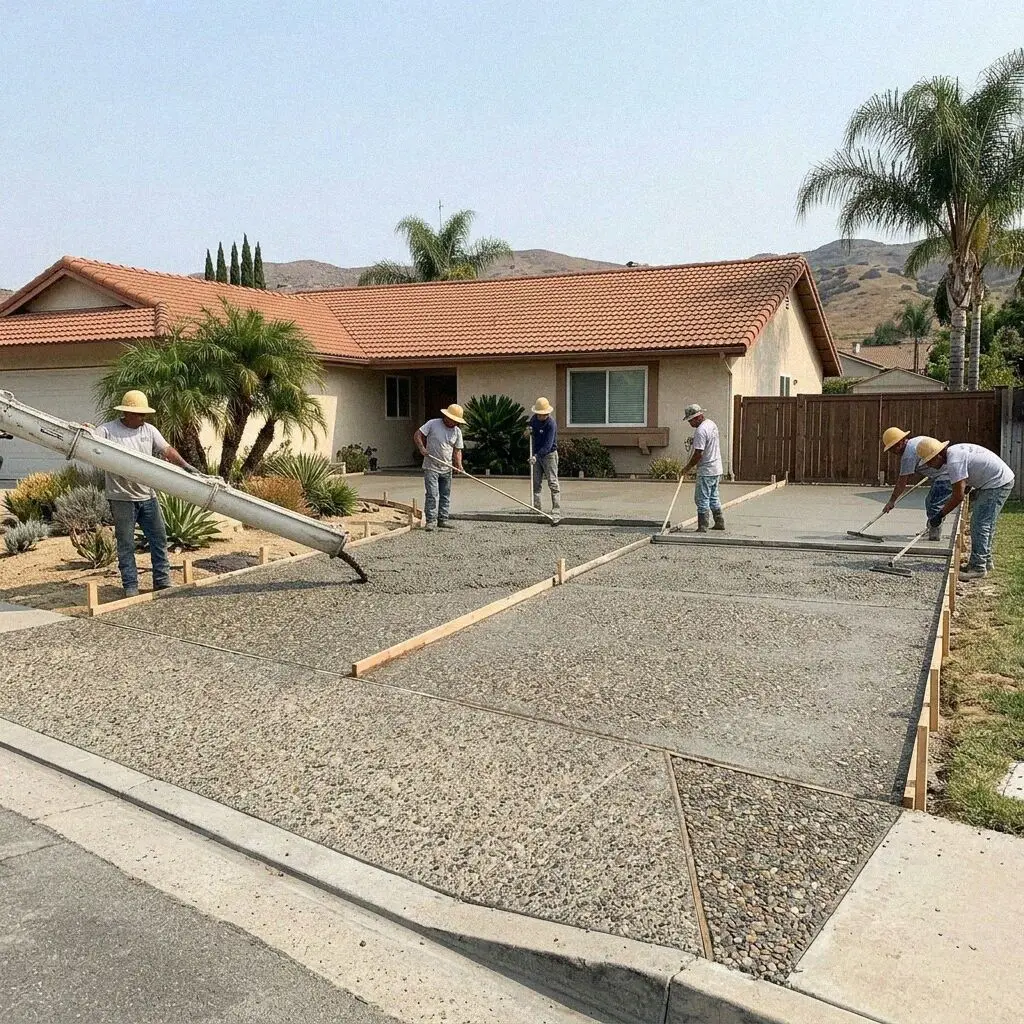
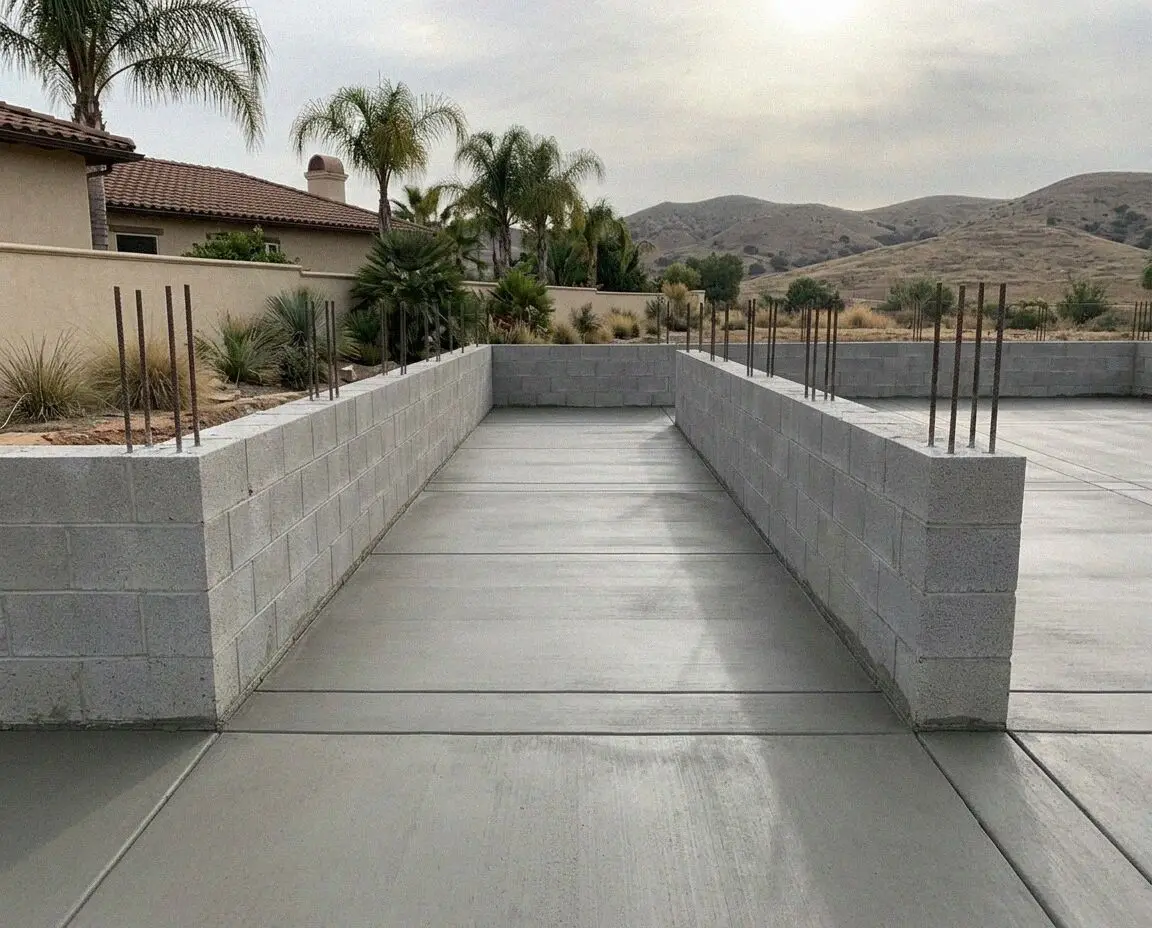
Concrete crew at work on a commercial parking lot in Orange, CA

Corridor and ground

What a Parking Lot in Orange, CA Has to Answer

A lot here is decided by the one truck that stops on it every week and the sidewalk it has to cross to get there, and neither shows up in a stall count.

The commercial frontage of this city runs along Tustin Street, Chapman Avenue and Katella Avenue and around the three hospitals off Main Street, and nearly all of it was paved in asphalt for cars when the buildings went up. What actually loads those lots is the refuse truck at the enclosure, the box truck at the delivery door and, at the clinics, an ambulance on the same square yards all day. A slab whose depth follows those vehicles lasts; one poured evenly is patched every two years.

The sidewalk is the second thing. Most lots on these corridors drain to the street through the parkway, and the approach it crosses belongs to the city, so a lot that never touches the public walk still needs the encroachment permit for the drain and the apron. Under it all is the wash the city sits on, sand and rounded gravel that drains in an hour and will not lock under a plate until angular base is laid over it. Where a lot is cut into a slope we build its retaining wall too.

From call to striping

How We Build a Parking Lot in Orange, CA

Five stages, the same crew at each, and the person who walks the truck path with you is the one standing on it at the pour. The lot is split into halves so the business never loses every stall at once.

1

Walk the lot, mark the truck path

Curtis Ballard walks the lot with you, marks where the refuse truck and the deliveries stop, and counts the accessible stalls the code wants.

2

Choose the build and phase it

You choose the depths and the finish, and the lot is split into two or three phases around your busiest days. The permit is filed before milling.

3

Mill, dig and prove the base

Asphalt comes off and the truck path is dug deeper, then base goes in and is compacted until the plate stops moving on it, not until it looks flat.

4

Form, set steel and pour

Forms are set to the fall, the mat and the mesh go in on chairs, and each phase is poured in one morning and broomed across the line of travel.

5

Cut, cure, stripe and hand over

Joints sawn the same day, the slab cured seven days before cars and 28 before the truck, then striped, and the guarantee handed over at the walk.

Behind the number

What Sets the Estimate on a Parking Lot in Orange, CA

The area starts the figure and the trucks finish it. Two lots the same size can be a week apart in work once the refuse route and the delivery door are marked, so nothing is quoted off a photo. Every estimate is measured and written on site.

The frontage it sits on

A lot on a signaled corridor keeps its approach open to traffic through the pour, so it is phased more finely than one on a side street.

Where the trucks stop

Every yard on the refuse route and at the delivery door is 6 inches on rebar instead of 5 on mesh, and that area is measured as its own line.

Hospitals, churches and schools

A church lot fills once a week and a clinic lot all day, so one pours in two phases and the other in four, and the phasing is most of the gap.

Drains and the sidewalk

A new catch basin, a parkway drain under the walk or a rebuilt approach are permitted through Public Works and inspected, and each is itemized.

The walk and the written figure cost nothing, and the call to set a time comes within 1 business day. Phasing is drawn on the estimate, stall by stall. (657) 236-3410 or send us a message.

Ready to have your Orange, CA lot walked and measured?

Send the form or call, and someone rings back within 1 business day to fix a time. Curtis Ballard walks the lot, marks the truck path, checks the accessible stalls and writes the figure on the spot, with the phasing on it.

Request a Free Estimate

Written on site · No obligation

By submitting, you agree to our disclosure and consent terms, including being contacted by Plaza Orange Concrete.

Lots we replaced

Three Orange, CA Parking Lots, in Their Owners' Words

Three reviews left on Google, Facebook and the BBB, each about a commercial lot rather than a drive or a patio, and each naming the truck or the stall count the slab was built for.

Google review

“We run a strip of six units on Tustin Street and the lot had ruts you could park a shopping cart in. They milled it in two halves so our tenants never lost their frontage, poured the aisle to the bins at 6 inches and the stalls at 5. Eighteen months on there is not a mark at the enclosure.”

Priya M. of OrangeStrip retail lot rebuild · Google · 2025
Facebook review

“Our church lot fills on Sunday and sits empty most of the week, and Curtis phased the pour around that. The accessible stalls by the hall are dead level now, which the county inspector had flagged twice on the old asphalt. Forty years is what he said to expect and I believe him.”

Deacon R. of El ModenaChurch parking lot · Facebook · 2024
BBB review

“The apron behind our clinic had dropped an inch below the door and every delivery hit the lip. They dug it out, poured a 7-inch apron on two mats of rebar and tied it into the building slab. Two winters of box trucks since and the joint at the door is still tight.”

Lourdes A. of OrangeLoading apron and lot · BBB · 2023

Before you book

Parking Lot Questions Asked in Orange, CA

How long the stalls are out, what the estimate covers, which parts the city permits, and what is guaranteed once the stripes are on, answered for a corridor lot in this city.

(657) 236-3410
  • Why do two lots the same size get different estimates?

    Because the trucks and the phasing are not in the square footage. The length of the refuse route and the size of the delivery apron set how much of the lot is 6 inches on rebar rather than 5 on mesh; the phases the business needs set how many pour days there are; and what the plate finds under the old asphalt sets how much base goes in. Two lots the same size can differ on all three.

  • How long are my stalls out of use while the lot is rebuilt?

    Ten to fourteen days for each phase, and only that phase is closed. Milling and base take two days, forming and pouring one, then the concrete cures seven days before cars go on it. The truck path is held for 28 days, so the bins are moved to the finished half in the meantime. A lot the size of a strip of shops is usually two phases, so the whole job runs about four weeks with half the stalls open the entire time.

  • Does the estimate include removing the old asphalt?

    Yes. Milling the asphalt, hauling it for recycling, breaking out the old islands and wheel stops, and digging out any soft base the plate finds are all in the figure you sign. What sits outside it is named at the walk rather than added later: a catch basin the plan checker asks for, a new approach across the sidewalk, or a light standard that has to be moved. Striping and the accessible signage are in.

  • What permits does a new parking lot need in Orange, CA?

    A building permit from Building and Safety Services for the lot itself, and an encroachment permit from Public Works for anything that crosses the property line, which is the drive approach and any drain under the sidewalk. The plan check also looks at the accessible stall count and slopes under Chapter 11B, and on a larger lot may ask for a stormwater plan. We draw the plan, file it and stand at every inspection.

  • Will my property insurance pay for a failed parking lot?

    Almost never for wear. A commercial policy treats rutting, alligator cracking and settlement as maintenance, so a lot that has worn out over thirty years is the owner's to replace. The exception is a sudden event, a water main that washed the base out or a vehicle that struck an island, and those are worth photographing before we mill anything. Ask your carrier before you book; we will put the cause in writing.

  • What does the guarantee on a parking lot cover?

    How it was built: the base compacted, the two depths poured where the plan shows them, the steel in them, the joint layout and the slopes at the accessible stalls, all printed on the estimate before you sign. It is a written workmanship guarantee against defects in how it was built. Tire marks, oil, staining and ground moving beyond what the joints control sit outside it.

  • What concrete and steel go into a parking lot slab?

    A 4,000 psi ready-mix placed the morning it is batched, crushed aggregate base underneath, number 4 rebar on chairs through the truck path and the apron, and welded mesh through the stalls. The apron at a loading door takes two mats. The mix design and the steel are named on the estimate, so what comes off the truck can be checked against what you agreed to, and the batch tickets come with the paperwork.

  • Does someone from the business need to be on site?

    Only for the walk at the start and the walk-through at the end. In between the crew needs water, the phase coned off and the bins moved to the open half. If the enclosure sits in the phase being poured, the hauler is told the date and the bins go where the crew can reach them. Deliveries carry on through the open half, and the fire lane is kept clear at every stage, which is what the phasing is drawn around.

Towns we pour in

Concrete Parking Lots Around Orange, CA

The eight nearest towns on the coverage list, with the straight-line distance from the yard on North Tustin Street beside each. Every lot is walked and measured before a figure is written.

Show All Areas We Serve

Book a free walk of your Orange, CA parking lot

Call or send the form and you hear back within 1 business day. Say roughly how many stalls there are, where the bins sit and which days the lot is fullest, and the walk can be booked for a day inside the same week.