Serving Orange, CA and surrounding areas.(657) 236-3410
Plaza Orange Concrete

Concrete Cutting in Orange, CA, Clear of the Pipes Cast in the Slab

Plaza Orange Concrete scans a slab for what was cast into it, chalks the line round it and saws wet to a set depth, so a trench never meets a pipe. Every estimate is measured and written on site.

Google reviewsFacebook reviewsBetter Business Bureau reviews5.0 Stars Rated by our customers · Google, Facebook and the BBB
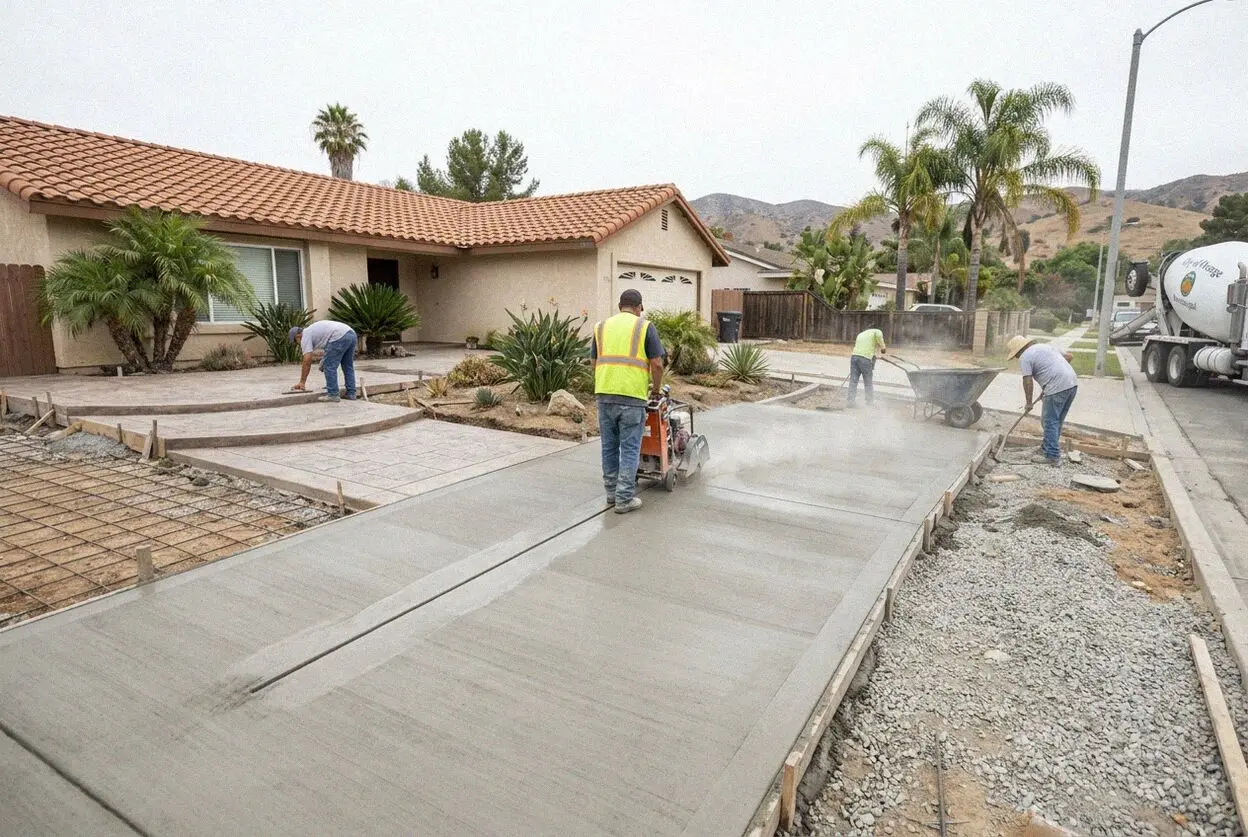
Walk-behind saw cutting a chalked line across a garage slab in Orange, CA
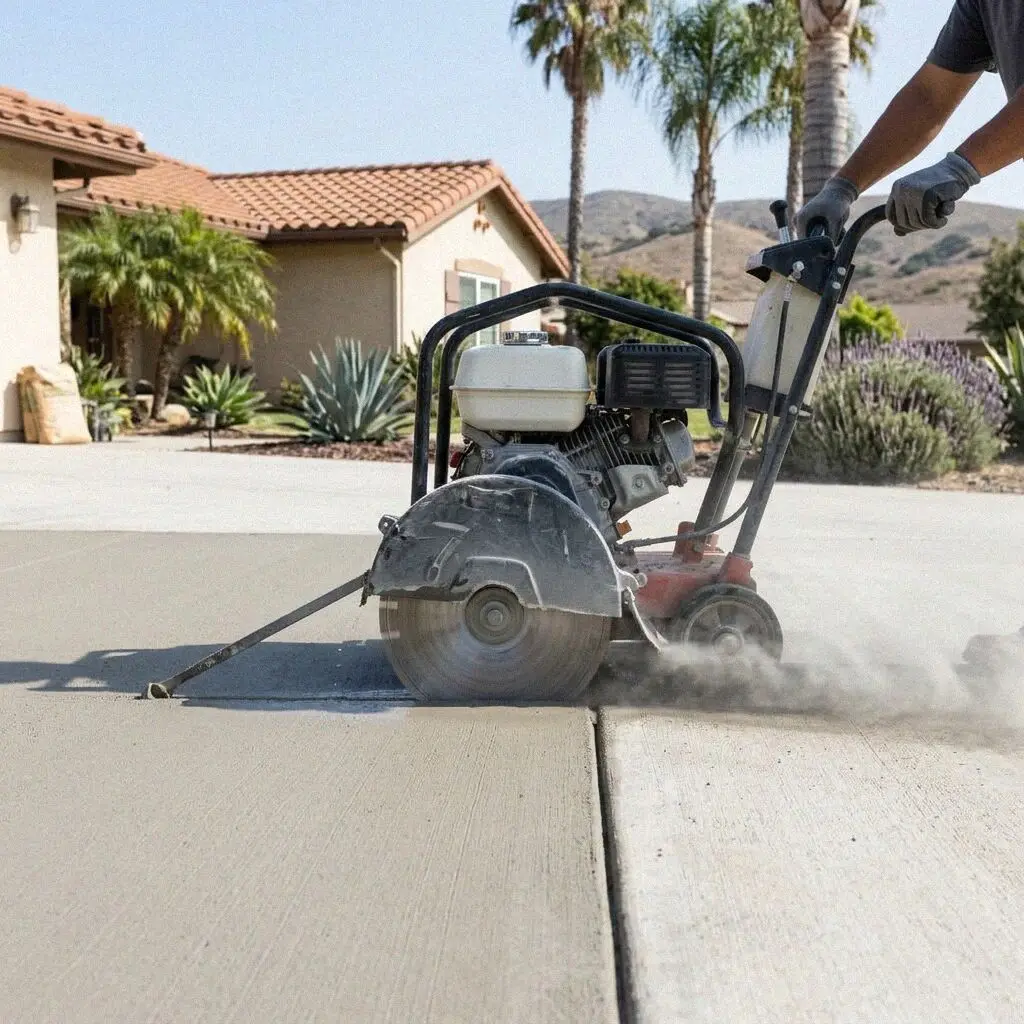
Hands guiding a wet saw along a chalk line on a house slab in Orange, CA

How a cut is set out

Cutting Concrete in Orange With the Slab Read First

A cut goes wrong at what it finds, not at what it leaves. A slab saw does not care what is under it, and in this city what is under it is more often something than nothing: heating pipes in the Eichler tracts, copper supply lines in the post-war streets, and tendons in the newer hill houses. So every cut here starts with the slab scanned and the line moved to miss what is in it, and only then does the blade go down, to a depth that was decided rather than found.

Plaza Orange Concrete has cut and cored here since 2018 under Curtis Ballard, who spent 18 years on central Orange County crews before that and who marks every line himself. Orange holds the largest group of Eichler houses in Southern California, around 350 of them across Fairhaven, Fairhills and Fairmeadow, and every one was built with its heating as pipe cast into the floor slab. A saw dropped into one of those floors on a guess is a heating system gone in a second.

The saws run under a CSLB C-8 concrete license with liability insurance on every job. Cutting alone needs no permit, but what follows it usually does: a slab opened for a drain is plumbing work Building and Safety Services inspects through the Civic Portal, and a cut in the parkway is an encroachment permit from Public Works. We say which before the blade goes in. The patch closing the cut carries a written workmanship guarantee against defects in how it was built.


Why a saw comes out

When does an Orange slab need cutting, not breaking?

A warm patch on a cold floor

A stretch of floor warmer than the rest, with the water meter turning while every tap is off, is a supply line leaking under the slab. The fix is a trench cut to the line and closed again, not a floor broken out, because everything either side of the leak is sound and is staying.

A crack wandering across a bay

A crack that runs at an angle across a garage or a patio with no joint near it is concrete poured without enough relief that chose its own line. A joint sawn across the panel either side gives the next crack somewhere straight to go and stops the wanderer opening any further.

A doorway wanted in a stem wall

Turning a garage into a room or reaching a crawl space from a new laundry usually means an opening through concrete poured solid. A wall saw takes the piece out square to the size on the drawing, where a breaker leaves a ragged hole to be formed and repaired before a frame fits.

A slab lifting beside a tree

A panel raised at one edge by a root is the urgent one, because the lip trips people and the next wet winter lifts it further. Sawing that panel out along its joints and repouring it flat is the repair, and cutting the root cleanly at the same time stops the new panel lifting too.

In every cut

What Every Concrete Cut in Orange Includes

Eight things are in every cut and none is a separate line, because each answers a way the job goes wrong here: a line dropped onto a pipe, a wet saw run in a lived-in room, and a patch standing proud of the slab it was meant to vanish into.

The slab scanned first

A ground-penetrating radar pass over the route finds pipe, conduit, mesh and tendon before anything is marked, and the line moves to miss them.

Depth set from a core

One core at the line gives the real thickness and what is under it, so the blade is set to go through the slab and not into the pipe beneath.

Lines chalked and agreed

Every cut is snapped on the floor and walked with you before the saw starts, so the opening is where the drawing says and not an inch off it.

Cut wet, slurry caught

Water on the blade keeps the dust down and the blade cool, and the slurry is vacuumed and taken away rather than run into a drain or a lawn.

Corners finished by hand

A walk-behind saw overcuts a corner, so the last inches are finished with a hand saw and the piece is lifted out with clean edges.

The room sealed off

Inside a house the room is sheeted and the air registers taped, so a cut in a hall does not put grit into every other room of the house.

The base put back

A trench is backfilled and compacted in layers and the pipe bedded before the patch, because a patch over a soft trench sinks inside a year.

Patch flush, guaranteed

The closing pour is doweled into the slab either side and floated level with it, and the guarantee on it is handed to you in writing.

Four ways to cut

Concrete Cutting Methods in Orange, Compared

Four ways to open concrete on a lot here, set against how thick the piece is and where it stands. The scan, the chalked line and the slurry control are the same for all four, so the table is about the tool on the line.

OptionSuitsDepth per passWet or dryEdge it leaves
Walk-behind slab sawTrenches and joints across a floor or a driveUp to 6 inches with a 20-inch bladeWet, slurry vacuumed as it goesStraight, overcut at the corners
Hand-held cut-off sawCorners, short cuts and stepsAbout 5 inches with a 14-inch bladeWet, fed from a tankSquare corners on a freehand line
Core drill rigHoles for drains, vents and conduit1 to 12 inches across, any slab depthWet, water ring on the floorA round hole with smooth sides
Track-mounted wall sawDoorways and windows through stem wallsUp to 24 inches in stepped passesWet, on a rail bolted to the wallPlumb, ready for a frame

A slab saw costs least per foot and a wall saw most, and coring is the one to book when what you need is a hole for a pipe rather than a line across the floor.

Crew scanning and chalking a slab before a cut at a house in Orange, CA

What the slab holds

Why a Slab in Orange Is Scanned Before It Is Cut

More floors in this city have something cast into them than in most towns the van drives to, and three tracts and one hillside account for most of it.

The Eichler tracts are the clearest case. Fairhaven, Fairhills and Fairmeadow went up in the early 1960s with radiant heat, which means a serpentine of pipe laid on the base and the slab poured over it, so the whole floor is a heating element with no drawing of where the loops run. Trenching one for a new drain without finding the loops first is how a house loses its heating. The plain 1960s tracts around them ran copper through the slab too, and a saw finds a live line as a leak does.

East of the 55 the problem changes shape. The hill tracts above Santiago Canyon Road went up from the late 1980s on ground that moves when wet, and many stand on post-tensioned slabs, where steel cables pulled tight after the pour hold the slab together. A blade through one lets go of a load nobody wants released, so the scan there is the whole job. In Old Towne there is often no slab at all, and a cut means the porch, the alley walk or a stem wall needing footings for a new opening.

From call to patch

How a Concrete Cut Is Done in Orange

Five stages, the same two people at each, and the one who scanned the floor is the one on the saw. Whatever follows the cut is permitted before the blade goes down, so the trench is not left open waiting on a counter.

1

Scan, core and chalk the line

Curtis Ballard runs the radar over the route, bores one core for thickness, and snaps the line where it misses what the scan found.

2

Choose the tool and the day

You settle the size of the opening and what goes into it, the tool is picked from the table above, and any permit for the work after is filed.

3

Sheet the room, set the saw

Inside a house the room is sealed and the water caught at source; outside, the slurry is dammed. The blade depth is locked to the core's reading.

4

Cut, lift and dig

The line is sawn wet in passes, the pieces are lifted out and taken away, and the trench or the hole is dug and bedded for whatever is going in.

5

Close flush and hand over

Backfill compacted in lifts, the patch doweled and floated level with the old floor, and the guarantee handed over on the walk-through.

Behind the number

What Sets the Estimate on a Concrete Cut in Orange

The length and depth of the line start the figure and what is inside the slab finishes it. A cut that has to thread between heating loops is a slower cut, so nothing here is quoted from a floor plan. Every estimate is measured and written on site.

A tract house on a slab

A trench across a hall for a drain is set by its length, the slab's thickness at the core, and whether the copper runs under it or through it.

An Eichler on radiant heat

The scan takes longer and the line bends more, and the loops nearest the cut are pressure-tested before and after, which is time on the estimate.

A hill house on tendons

A post-tensioned slab is cut only where an engineer has marked it and the tendons are located to the inch, so that letter is part of the figure.

An opening in a stem wall

A wall saw on a rail, the piece lifted out and the edges dressed, with the floor above shored before the cut, all priced as its own item.

The scan, the core and the written figure cost you nothing, and the call to fix a morning for them comes within 1 business day. (657) 236-3410 or send us a message.

Ready to have your Orange slab scanned and marked?

Send the form or ring, and someone gets back to you within 1 business day to set a morning. Curtis Ballard scans the route, bores the core, chalks the line and writes the figure at your house, and you owe nothing for it.

Request a Free Estimate

Written on site · No obligation

By submitting, you agree to our disclosure and consent terms, including being contacted by Plaza Orange Concrete.

Cuts we made

Three Orange Slabs Cut, in Their Owners' Words

Three reviews from Google, Facebook and the BBB, each about a cut rather than a pour, and each naming what was in the floor or how long the floor stood open.

Google review

“Our Fairhaven Eichler had a leak somewhere under the kitchen and two contractors would not touch the floor because of the heating pipes. They scanned it, marked the loops in chalk and cut a trench that ran between them. Floor closed in three days and the heat still works.”

Priya N. of FairhavenTrench between radiant loops · Google · 2025
Facebook review

“We needed a doorway through the concrete stem wall under our 1920s house to reach the crawl space from the new laundry. They shored the floor above, cut it square with a wall saw on a track and the frame went straight in. About four hours of noise and no dust in the house.”

Tomas E. of Old TowneOpening in a stem wall · Facebook · 2022
BBB review

“The garage floor had one long crack wandering across it and the corner by the driveway was lifting on a root. They sawed the corner panel out along the joints, cut the root, and put two new joints across the bay. The panel has stayed flat through two wet winters since.”

Denise R. of El ModenaPanel cut out and rejointed · BBB · 2023

Before you book

Concrete Cutting Questions Asked in Orange

What sets the figure, how long a floor is open, what the estimate covers, which counter a cut goes to, whether a policy pays and what is guaranteed on the patch, answered for a slab here.

(657) 236-3410
  • Why is a cut through an Eichler floor estimated differently?

    Because the line has to thread between heating loops that no drawing shows. The scan takes longer, the route bends around the pipes it finds, the loops nearest the cut are pressure-tested before the saw starts and again after the patch, and the saw runs shallower and slower. A trench of the same length across a plain 1960s slab is a morning; across a radiant floor it is a day. Both are measured at the house.

  • How long is a trench open inside a house in Orange?

    Two to three days on the ordinary job. Day one is the scan, the cut and the dig; the plumber or the electrician has the trench on day two; and the backfill and the patch go in as soon as their inspection is signed. The patch takes foot traffic after a day and a fridge after a week. Where the trench crosses the only route to a bathroom it is cut in two lengths, so one is always closed and walkable.

  • Does the estimate include closing the cut back up?

    Yes. The scan, the core, the cut, the removal of the pieces, the backfill and the flush patch are one figure, and the patch is the part most often left off by a firm that only cuts. What sits outside it is named at the visit: the plumbing or electrical work that goes in the trench, its permit, and any flooring laid over the patch afterward. What you sign is what the bill says.

  • Which permit does a slab cut in Orange go under?

    The permit belongs to whatever goes in the cut, not to the cut itself. A drain rerouted through a trench is a plumbing permit, an outlet run in conduit is electrical, and both are applied for on the city's Civic Portal and inspected in the open trench by Building and Safety Services. A cut in the drive approach or the parkway is Public Works and an encroachment permit. A relief joint in your patio needs nothing.

  • Will homeowners insurance pay to cut the slab for a leak?

    Often for the access, rarely for the pipe. Many policies here exclude the failed line itself but cover the cost of getting to it, which is the scan, the cut, the trench and the patch, and that is a claim worth making with the leak detector's report attached. A cut for a remodel, a new opening or a joint is never a claim. Ask your carrier before we book, and photograph the wet patch and the meter reading first.

  • What is guaranteed on a cut and its patch?

    The patch and the trench under it: the backfill compacted in lifts, the dowels into the old slab, the mix, and the level it was floated to, written on the estimate. It is a written workmanship guarantee against defects in how it was built. The pipe or cable in the trench belongs to the trade that fitted it, and a crack in the old slab past the cut line is the old slab. Where our patch sinks or lips, we re-lay it.

  • What blade, water and concrete go into a cut here?

    A diamond segmented blade sized to the slab, 14 inches on the hand saw and 20 on the walk-behind, run wet from a tank so the cut stays cool and the dust stays in the slurry. Coring uses a diamond barrel with a water swivel. The patch is a 3,500 psi ready-mix on compacted base, doweled into the slab with number 4 bar every 12 inches and floated to match the old surface. All of it is named on the estimate.

  • Do I need to be home while the slab is cut?

    For the scan and the chalking at the start, yes, because the line is agreed on the floor with you standing on it. After that the crew needs water, power and the room cleared, and you can be out. A wet saw inside a house is loud for the hour or two it runs and the room it runs in is sealed, so pets and anyone working from home are better in another part of the house for that part of the day.

Towns we cut in

Concrete Cutting in the Towns Around Orange

The eight towns nearest the Tustin Street office, each with its straight-line distance beside it. The scanner and the saws travel in the same van, so a floor in any of them is read before it is cut.

Show All Areas We Serve

Book a free scan of the slab you need cut in Orange

Call or send the form and you hear back within 1 business day. Say what the cut is for and roughly when the house was built, and if it is one of the Eichler streets say so, because a radiant floor is planned differently.