Newport Beach is two grounds. The Peninsula, Balboa Island and Lido Isle sit on sand and fill a few feet above the tide, while Newport Heights, Corona del Mar and Eastbluff sit on the terrace above.
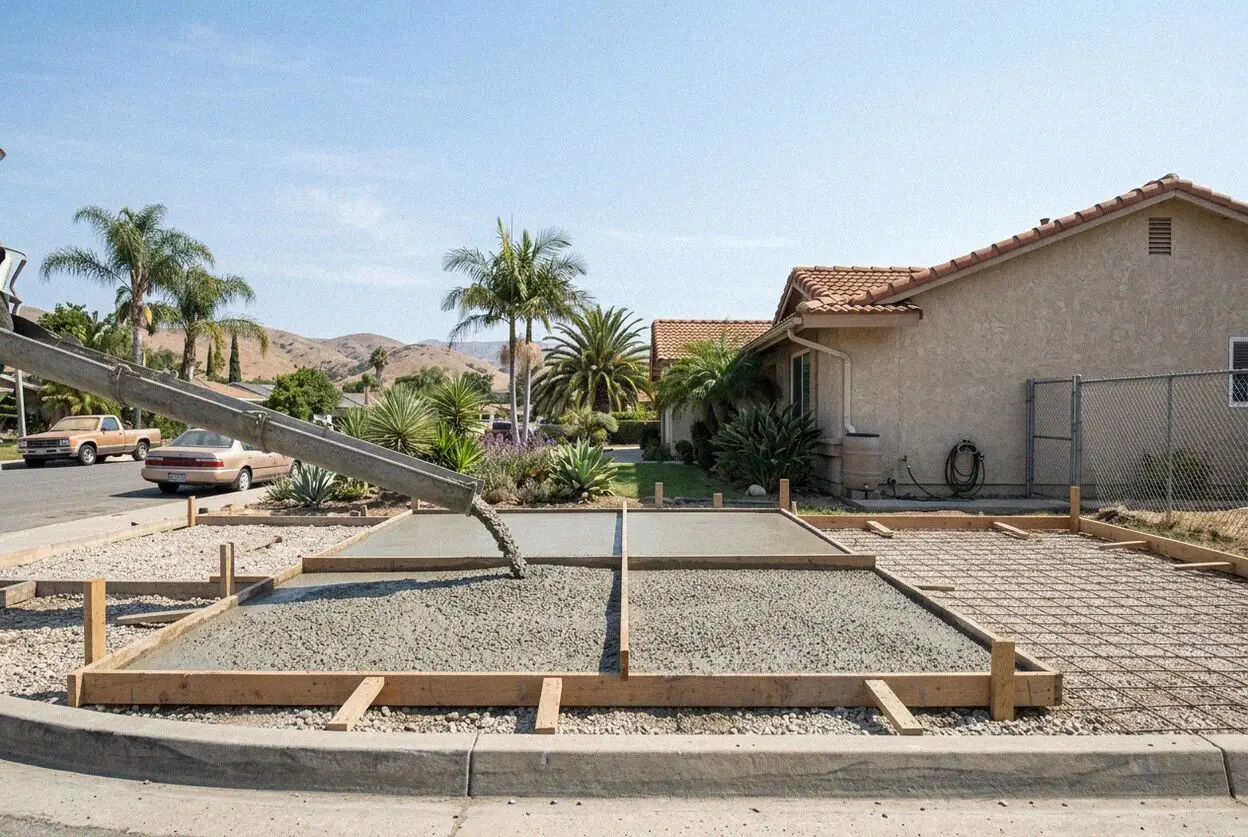
On the sand side, a hole dug for a footing meets water before it meets firm ground, so footings are wide and shallow on compacted base rather than deep and narrow. Sand drains well but holds no shape, which is why an apron on Balboa Island poured straight onto it settles at its edge within a few winters. Salt air reaches steel through any crack, so the cover over the bars is deeper here than inland. On the terrace the ground is firm marine sediment, except at the bluff edges, which move.
So we ask two questions on every Newport Beach visit before we ask about finish. Which ground is the lot on, and is it inside the coastal zone. The first decides the base, the steel cover and the depth of the footing. The second decides whether the job is a building permit alone or a coastal review as well, since most of the city west of the bay and along the bluffs is inside the zone the city administers under its Local Coastal Program. Both answers are written into the estimate.